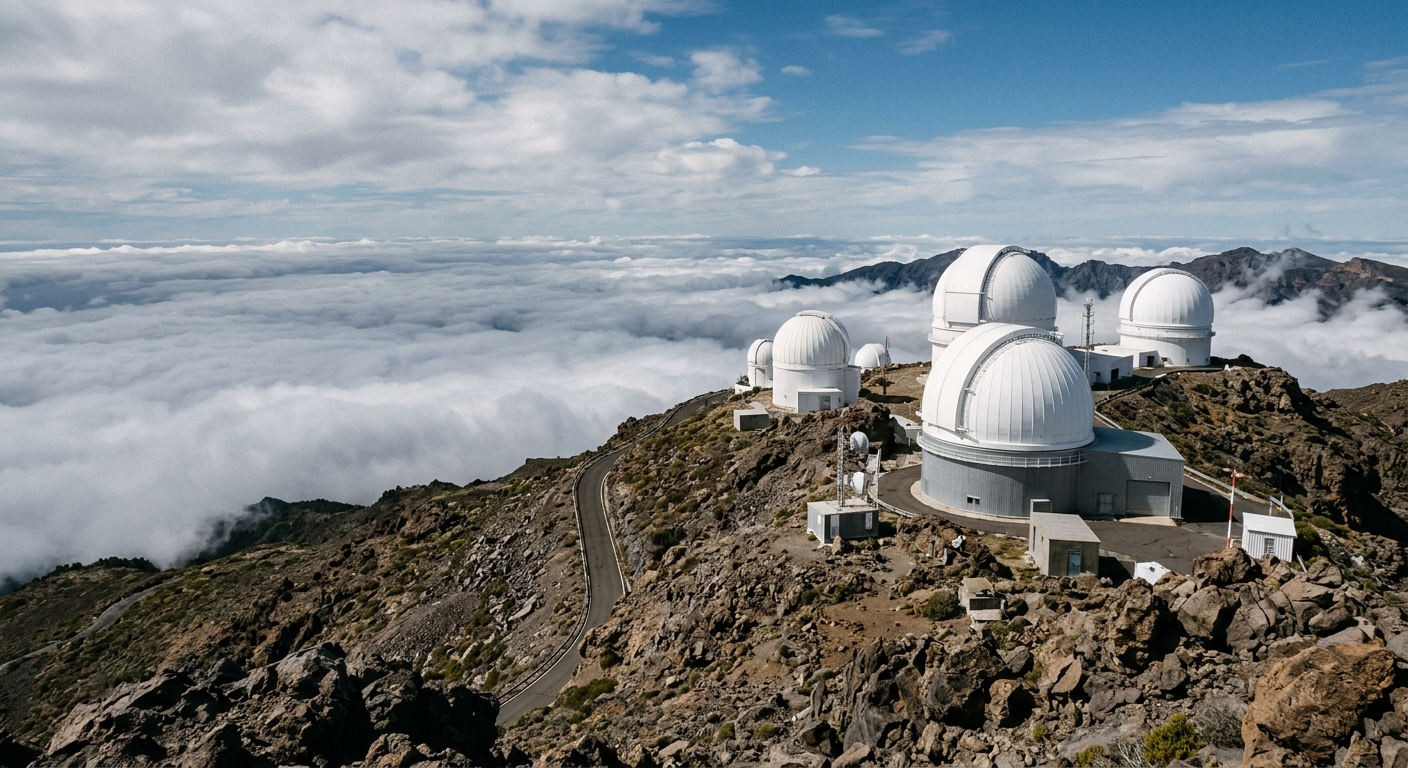
AI-generated illustration; not a photograph of the reported event.
- calendar_today November 6, 2026
Amendments to Maunakea Management Plan Supported by Regents Committee
The University of Hawaii (UH) Board of Regents Facilities and Long Range Planning Committee has voted to support amendments to the university's management plan for the Maunakea summit region. The changes would permit decommissioned observatory sites to be reused for future astronomical facilities.
Background on Management and Upcoming Transition
UH has managed the Maunakea summit lands since 1968 under a state lease. This responsibility is set to transfer in 2029 to the Maunakea Stewardship and Oversight Authority (MKSOA), a state agency created in 2022 after longstanding tensions over observatories on Maunakea. While MKSOA is developing its own management plan, the existing UH plan will remain in effect. If MKSOA fails to meet certain transition deadlines, management will revert to UH.
Purpose of the Amendments and Alignment with Act 255
Gregory Chun, executive director of the UH Hilo Center for Maunakea Stewardship, presented the amendments to the regents committee. He explained that the changes align the UH management plan with Act 255, the legislation that established MKSOA. Act 255 directs MKSOA to prioritize reuse of decommissioned observatory footprints for future astronomical developments, rather than developing new, undeveloped sites.
UH's current plan, adopted in 2022, had previously prohibited reuse of five observatory sites marked for decommissioning, aiming to reduce the total number of observatories on the summit. This stance conflicted with the newer state directive under Act 255.
Public and Board Response to Proposed Changes
Chun noted that opinions on the amendments were divided. Some voiced support, emphasizing responsible land management and environmental perspectives that favor reusing developed sites. Others, including several MKSOA board members and members of the public, expressed concern that UH was preempting MKSOA’s forthcoming authority and community-driven planning. In particular, some suggested that the timing raised questions about facilitating future projects, such as the Thirty Meter Telescope (TMT), which has faced significant public opposition and protests in the past. TMT management has indicated interest in potentially using a decommissioned site instead of its original planned location.
At the October 8 MKSOA meeting, public testimony was nearly evenly split for and against the amendments. Supporters, including the Hawaii Island Chamber of Commerce, advocated for a balanced path that allows astronomy and related education to continue, while those opposed argued for maintaining decommissioned sites as off-limits and urged deference to MKSOA’s planning process.
Next Steps and Pending Full Board Decision
The MKSOA board did not take a position on the amendments but forwarded public comments to the UH Board of Regents. At the regents committee meeting, several testifiers reiterated opposition, emphasizing that UH’s planning role is nearing its end and focus should shift to carrying out decommissioning for sites whose leases expire in 2033 should leases not be extended.
Chun underscored that maintaining consistency with Act 255 is essential while the transition process continues, especially given a recent extension granted to MKSOA for preparing its management plan. The regents committee ultimately agreed, voting unanimously to endorse the amendments. The full Board of Regents will consider the amendments at a future meeting.
Conclusion
The proposed changes to the maunakea management plan signal a shift toward flexibility in land use for astronomical facilities, with strong opinions on both sides regarding stewardship, cultural values, and the future of scientific endeavors on Maunakea.
Source: westhawaiitoday.com.