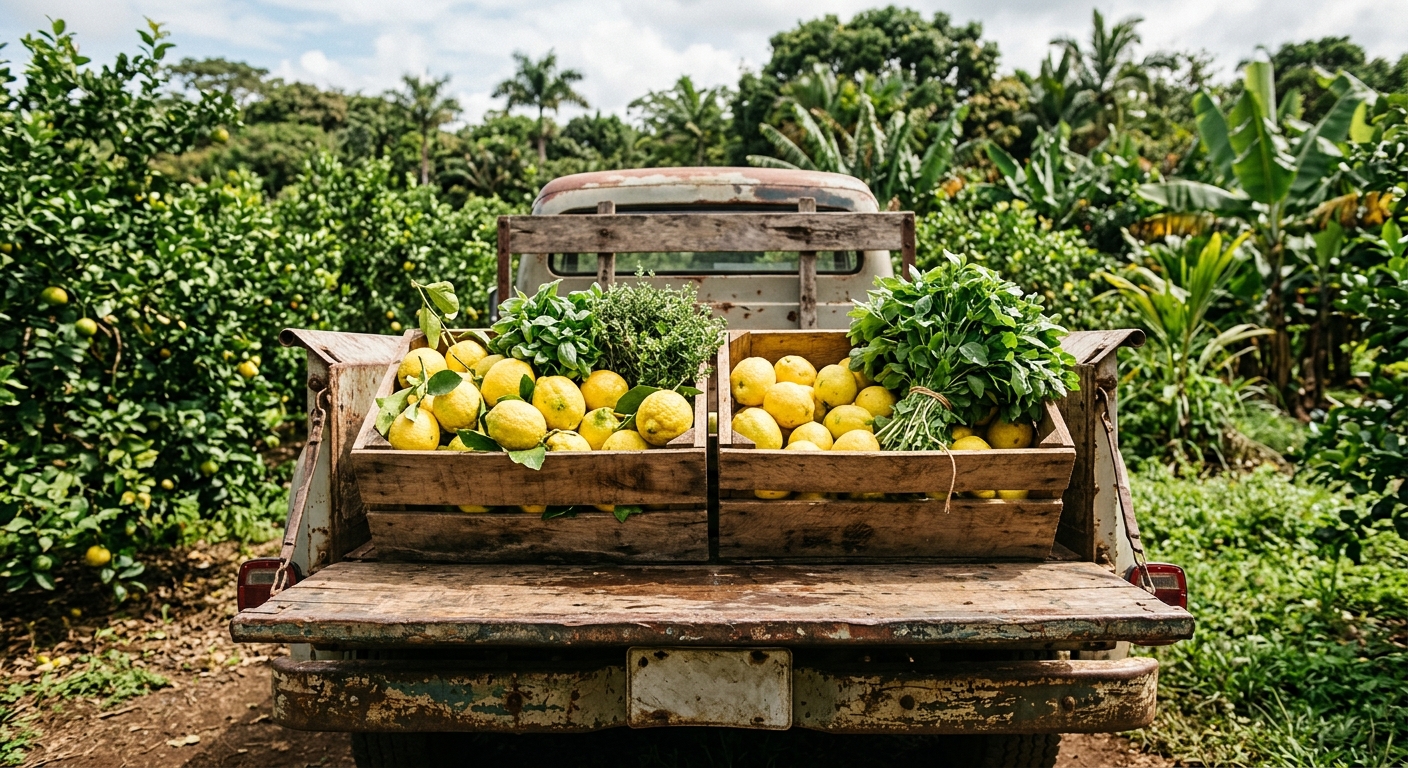
AI-generated illustration; not a photograph of the reported event.
- calendar_today November 26, 2026
The Impact of Federal Regulations on Hawaii Agriculture
Hawaii's agriculture industry faces significant challenges from federal regulations, which many believe hinder the growth and profitability of local farms. A recent report from the Hawaii Institute for Public Affairs suggests that the state’s agricultural output could potentially double if federal regulations were tailored to Hawaii's unique characteristics, providing better opportunities for farmers to access markets across the United States.
Economic Opportunities Lost Due to Quarantine Rules
The report predicts that Hawaii farmers could be missing out on an estimated $800 million annually in potential value due to current regulatory barriers—an amount greater than the entire value of the state's agriculture sector. These federal agricultural quarantine rules, designed to keep invasive pests out of the mainland U.S., often make it difficult for Hawaiian farmers to export fresh produce without extensive treatments or processing.
Current Restrictions and Their Effects on Exports
Under present regulations, many fruits and vegetables—including crops like cacao—cannot be shipped to the mainland unless treated or dried in advance. The strict rules are intended to prevent the transfer of pests unique to Hawaii, but in practice, they significantly limit what and how much can be exported.
According to Brian Miyamoto, executive director of the Hawaii Farm Bureau, only a few products such as sweet potatoes, papaya, and basil are routinely sent to the mainland. Even for new crops, farmers must go through lengthy and complicated approval processes, sometimes waiting up to five years for a single fruit or vegetable to be cleared for export.
Industry Voices Call for Change
Cameron Deptula, a co-author of the report and a special advisor to Governor Josh Green, emphasized the importance of easing these regulatory burdens to enable Hawaii farmers to expand into new markets. Ken Love, executive director of Hawaii Tropical Fruit Growers, highlighted that the current system does not always consider specific crop varieties, leading to inconsistencies in what can and cannot be shipped.
Some producers, like Mahi Pono on Maui and Volcano Wasabi on the Big Island, have sought federal approval for their crops, but the process remains slow and resource-intensive, especially for small-scale farmers.
The Road Ahead: Balancing Safety and Market Access
Efforts to streamline the approval process for new crops and reduce the regulatory burden could result in notable economic benefits for Hawaii, with the report estimating potential industry losses of $760 million and additional costs over $40 million for compliance annually. The challenge remains to maintain protections against invasive pests while supporting the state's agricultural economy.
Local leaders, including Miyamoto and Love, have discussed these challenges with Hawaii’s congressional delegation and the U.S. Department of Agriculture, advocating for solutions that would help local producers gain better access to mainland markets without compromising biosecurity.
Focus on Food Self-Sufficiency and Local Priorities
Despite export restrictions, Hawaii continues to emphasize local food production and self-sufficiency. Love urged that the state should prioritize feeding its own residents, noting that Hawaii imports large quantities of basic crops like bananas and oranges. Initiatives are in place to balance exports with efforts to find substitutes for imports, with some groups maintaining thousands of fruit trees as part of these programs.
The ongoing debate highlights the complex relationship between regulatory safeguards and economic opportunities for Hawaii’s farmers. The push for reform aims to support both the local industry and its role in broader food supply networks.
Source: civilbeat.org.