- calendar_today August 7, 2025
In 2025, artificial intelligence is no longer a mainland luxury—it’s become an essential part of real estate operations across Hawaii and the Pacific Islands. Real estate firms in Honolulu, Hilo, and Guam are increasingly turning to AI-powered assistants to manage customer inquiries, book virtual showings, and generate real-time property alerts.
Agents in Hawaii’s tight housing market are using AI-based pricing tools to assess property values based on hyperlocal conditions like coastal erosion risk, elevation, and proximity to tsunami zones. Chatbots and AI writing tools like Jasper are also handling much of the marketing and communications load—saving time for agents who often work across remote or dispersed markets.
On the transactional side, e-signature tools and mobile-ready platforms like Dotloop and DocuSign are allowing deals to close remotely, a key advantage in a region where inter-island travel is costly and time-consuming.
Virtual and Augmented Reality Improve Buyer Access
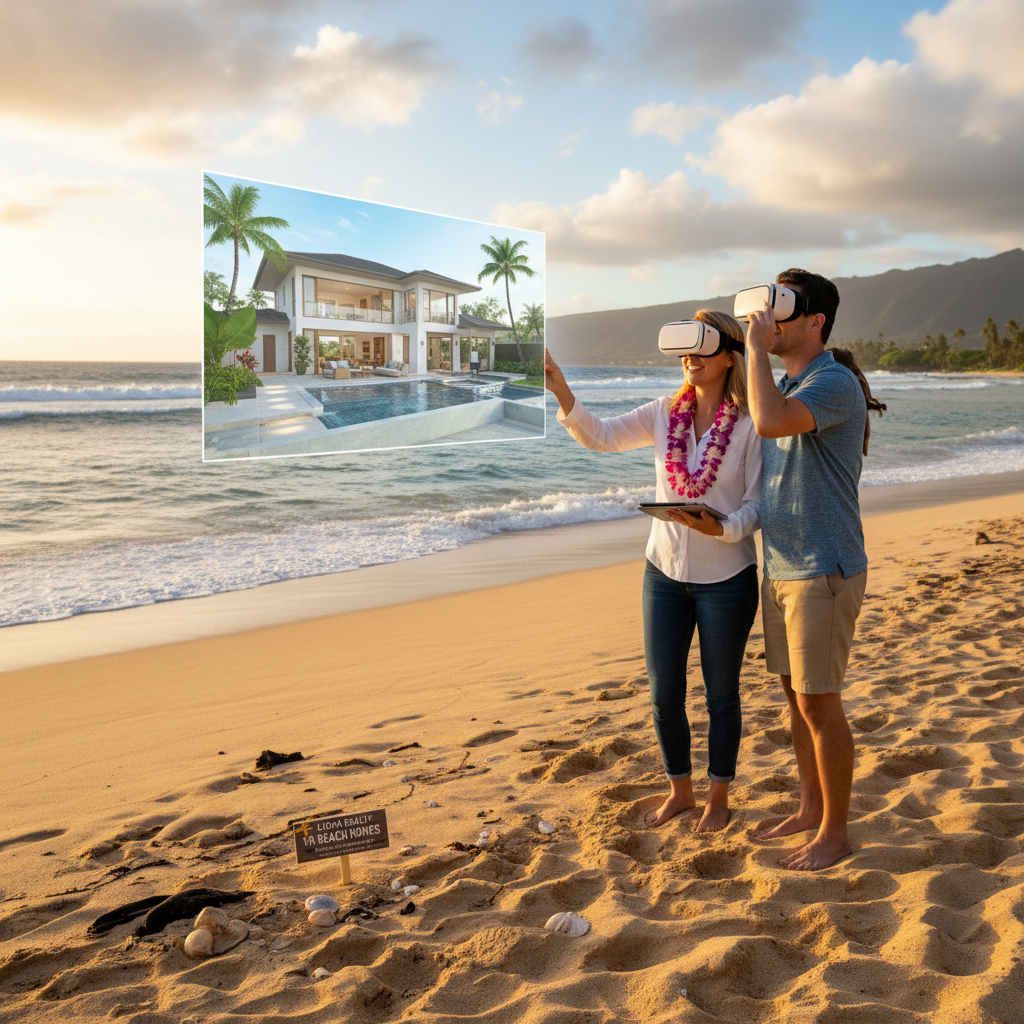
Geographic isolation and high tourism volume have long made traditional home showings difficult in Hawaii and the U.S. Pacific territories. In 2025, virtual reality (VR) and augmented reality (AR) have emerged as powerful solutions.
VR home tours allow buyers from the mainland U.S., Japan, or Australia to explore Maui beachfront properties or condos in downtown Honolulu from thousands of miles away. Tools like Matterport and Zillow 3D Home give potential buyers the ability to examine room flow, ocean views, and building layouts in high fidelity.
On-site AR tools are also gaining popularity. These apps help buyers visualize potential renovations or furniture setups in real time—a significant advantage for properties that may require updates due to age or island weather exposure.
Big Data Supports Smarter Investment and Development
Across Hawaii and the Pacific territories, real estate professionals are turning to big data analytics to guide pricing, investment, and development strategy. With tourism fluctuating and inter-island migration on the rise, data has become crucial for identifying profitable markets and anticipating future demand.
Platforms like CoreLogic and Redfin now offer granular data on neighborhood performance, occupancy rates, and buyer demographics. In high-demand zones like Waikiki and Kailua-Kona, these insights are helping investors fine-tune vacation rental pricing and determine whether to renovate, rebuild, or sell.
Agents are also using engagement dashboards to understand buyer behavior, such as which listings get the most views, which emails are opened, and which areas show the highest return on advertising spend.
Blockchain Begins Shaping the Future of Island Transactions
The complexities of real estate in Hawaii and U.S. Pacific territories—including land ownership issues, multiple languages, and off-shore buyers—make the potential of blockchain especially relevant in 2025.
Smart contracts are starting to automate escrow processes, reduce paperwork, and increase transparency between international clients and local agents. While full-scale implementation remains limited due to evolving legal frameworks, pilot programs in Hawaii are exploring blockchain-based land registries and digital ID systems.
As the region continues to attract high-value international investors, the demand for faster, fraud-resistant transactions is accelerating the blockchain conversation among developers and regulators alike.
Smart Home Features Attract Eco-Conscious Buyers
In an environment where sustainability matters, smart homes are gaining traction across Hawaii and the Pacific. Buyers are actively seeking out properties equipped with smart irrigation systems, solar panel integration, and energy-efficient lighting to reduce both cost and environmental impact.
According to a 2025 survey conducted by the Hawaii Association of Realtors, nearly 78% of homebuyers in the state said smart features influenced their purchasing decisions. In areas like Kauaʻi and Molokaʻi—where infrastructure can be limited—smart home automation also helps residents better manage energy use and maintenance remotely.
Agents are using these features as key selling points, especially when marketing to younger, eco-conscious buyers or remote workers relocating to island life.
Digital CRM and Marketing Tools Empower Local Agents
With a market often driven by international buyers, second-home owners, and long-distance clients, real estate agents across Hawaii and the Pacific now rely heavily on digital CRM tools to stay competitive.
Platforms like BoomTown, Follow Up Boss, and kvCORE allow agents to automate lead tracking, send follow-up emails, and deliver personalized market updates based on user behavior. These tools are especially crucial in rural areas like American Samoa or the Northern Mariana Islands, where in-person networking isn’t always feasible.
Local agents are now managing client pipelines, segmenting outreach by location or property type, and even using behavior data to predict when a past client might re-enter the market.
Regional Challenges: Tech Literacy and Connectivity
Despite impressive strides, several challenges still hinder full-scale adoption of real estate technology across Hawaii and the Pacific Islands. Internet access remains spotty in more remote or mountainous areas, limiting the effectiveness of cloud-based tools and VR tours.
Tech literacy also varies widely, especially among older property owners and traditional brokerages. And while blockchain and AI offer clear advantages, legal systems in U.S. territories haven’t yet adapted fully to support widespread use of smart contracts and digital ledgers.
Moreover, cultural nuances and local customs still play a major role in negotiations and transactions—meaning tech can’t fully replace the human aspect in many deals.
A Tech-Forward Yet Culturally Rooted Future
In 2025, Hawaii and the U.S. Pacific territories are proving that real estate innovation is not bound by geography. While some limitations persist, agents and investors who combine cutting-edge tools with local understanding are leading a new chapter in island property markets.
From smart condos in Honolulu to remote VR cabin tours on the Big Island, the region is leveraging technology to create a more efficient, transparent, and personalized real estate experience—one that’s as forward-thinking as it is rooted in community and place.