- calendar_today August 12, 2025
Hawaii’s real estate market in 2025 continues to be driven by Honolulu and its surrounding areas. As a key tourism and business hub, Oahu remains the focus for investors looking to capitalize on high-demand markets. Honolulu has seen consistent home price growth, with the Honolulu Board of Realtors reporting a 4.2% increase in home sales in February, despite challenges from global supply chain disruptions and increasing construction costs.
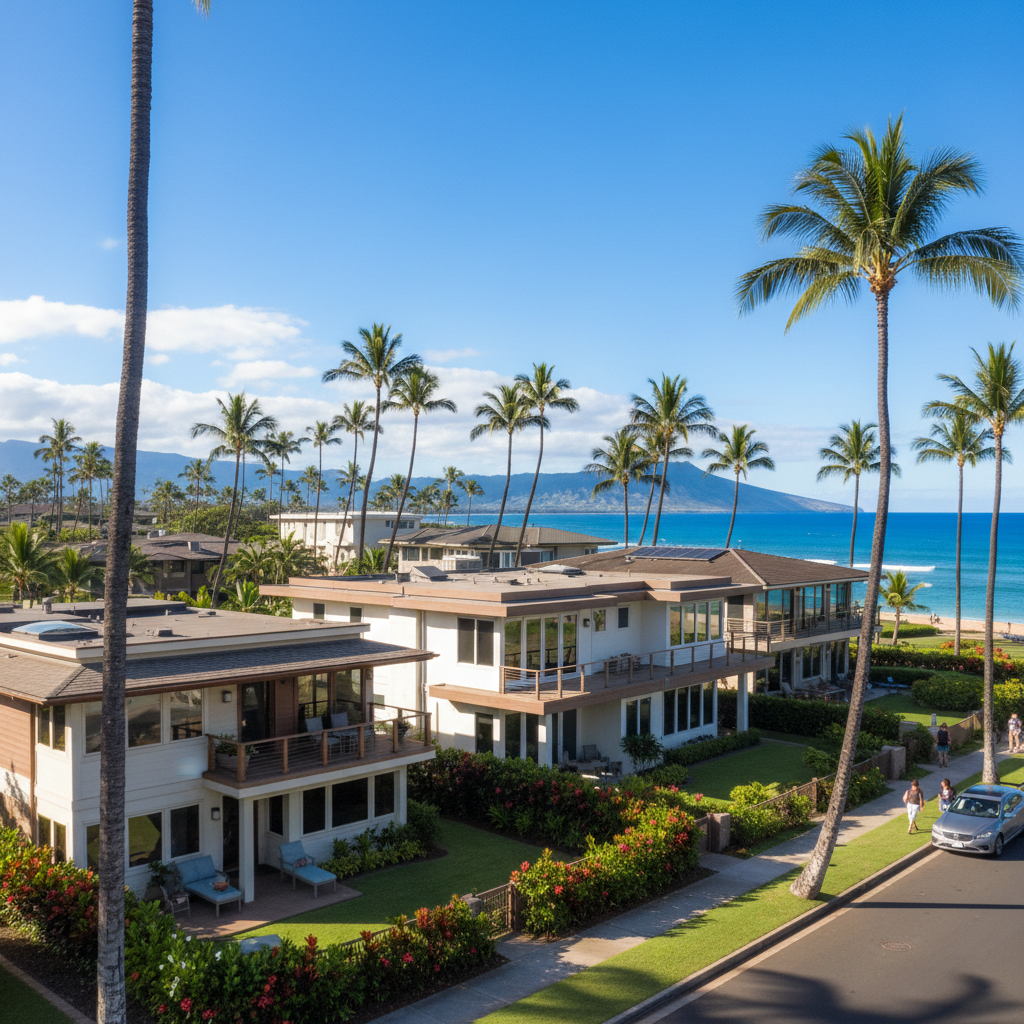
The demand for vacation homes and short-term rentals remains strong, supported by Hawaii’s tourism-driven economy. Investors are focusing on areas like Waikiki, Kailua, and Kaneohe for rental properties, as well as single-family homes that can also serve as short-term vacation rentals.
The Pacific Islands Show Increasing Interest
Beyond Hawaii, the Pacific Islands, including Guam, the Mariana Islands, and American Samoa, are seeing growing interest from real estate investors, particularly in vacation rentals and commercial properties.
Guam, with its strategic location in the Pacific, is attracting investment due to its military presence, tourism, and growing tech and service sectors. Saipan, a part of the Northern Mariana Islands, is seeing an uptick in interest from Chinese and Japanese buyers, particularly in resort and beachfront properties.
These islands offer relatively affordable real estate options compared to mainland U.S. markets, and many investors are capitalizing on local tax incentives for both residential and commercial developments.
Suburban Growth in Hawaii
While Honolulu remains the centerpiece of Hawaii’s real estate market, suburban areas on Oahu and Maui are seeing strong growth. Cities like Kapolei and Ewa Beach are benefiting from an influx of residents seeking more affordable housing compared to Honolulu’s high costs. These areas are growing rapidly due to the expansion of infrastructure, new retail and entertainment options, and improved transportation links.
In Maui, towns like Kihei and Lahaina are seeing a boom in both short-term rental properties and single-family homes, as more people move to the island for its natural beauty, quality of life, and growing remote work opportunities.
Mortgage Rates and Affordability in the Islands
Mortgage rates in Hawaii have remained steady at around 6% for 2025, and inflation has cooled to 2.8%, making financing more accessible for many homebuyers. However, Hawaii’s real estate market remains challenging for first-time buyers due to high property prices and limited inventory.
Despite these challenges, Hawaii’s lack of a state income tax remains a draw for high-net-worth individuals, fueling demand for second homes, vacation properties, and long-term rental investments. Suburban and rural areas in Maui, Kauai, and the Big Island continue to offer more affordable options for buyers looking to invest in real estate.
Commercial Real Estate: Focus on Tourism and Infrastructure
Hawaii’s commercial real estate market continues to be shaped by the state’s tourism industry. Hotels, resorts, and short-term rental properties dominate demand, especially in prime tourist areas like Waikiki, Kona, and Lihue. Developers are capitalizing on the resurgence of tourism by investing in high-end resorts and mixed-use properties that cater to both tourists and long-term residents.
The military presence in Hawaii also plays a significant role in commercial investments, particularly in Honolulu and Kapolei, where demand for retail spaces, service businesses, and residential complexes remains high.
REITs and Funds Provide Exposure to Pacific Real Estate
For investors seeking passive exposure to Hawaii and the Pacific’s real estate markets, REITs (Real Estate Investment Trusts) offer diversified options. The Vanguard Real Estate ETF (VNQ), which holds assets in both U.S. mainland and Pacific region properties, provides a solid way to access Hawaii’s rental market and the region’s commercial real estate sectors.
Local funds focused on Hawaii and the Pacific Islands offer specialized investment opportunities, particularly in vacation rental markets, luxury resorts, and residential developments targeted at remote workers and retirees.
Key Factors to Watch in 2025
Several critical factors are shaping the market in Hawaii and the Pacific:
- Tourism recovery in Hawaii, which continues to support both residential and commercial markets
- Government incentives for developments in Guam, American Samoa, and Saipan, especially in the hospitality and manufacturing sectors
- Environmental resilience, particularly for coastal and low-lying properties in Hawaii and the Pacific Islands
- Suburban development on Oahu, Maui, and the Big Island as demand shifts from Honolulu’s high prices to more affordable areas
For the latest updates on real estate trends, investment opportunities, and market data in Hawaii and the Pacific, subscribe to the Pacific Islands Real Estate Briefing.