- calendar_today August 12, 2025
Across Hawaii and the Pacific islands, the 2025 return of drive-in theaters is turning beaches and fields into open-air cinemas beneath trade winds and moonlight.
HONOLULU —
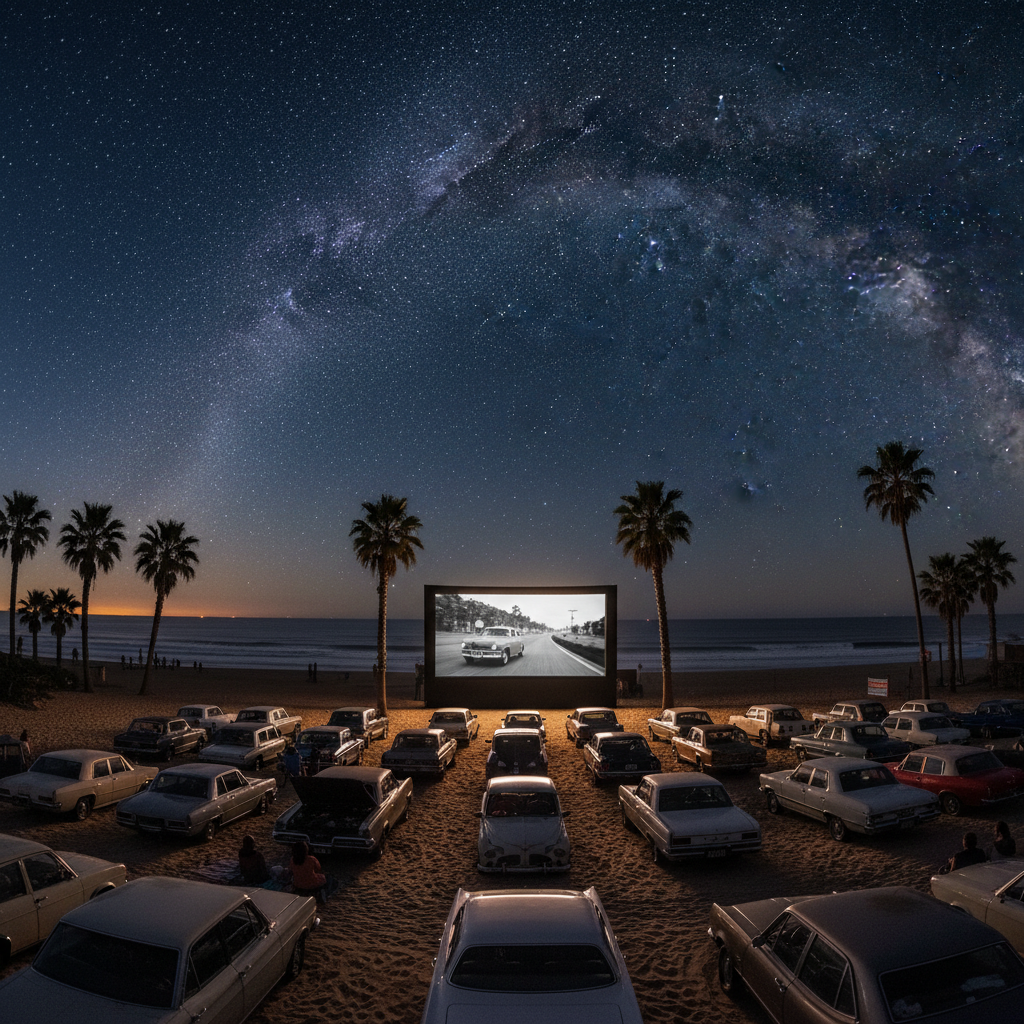
The ocean hums quietly beyond the lot. A salty breeze carries the sweetness of plumeria and roasted corn from a nearby stand. Cars roll in one by one, headlights dimming as the sun sinks behind the palms. On the glowing screen, a pre-show reel flickers to life, and somewhere in the distance, a conch shell sounds — as if even the sea approves of the night’s return.
In 2025, drive-in theaters have come back to the islands, softly, without spectacle or marketing buzz. There were no viral campaigns, no red carpets — only the steady rhythm of word-of-mouth across Oahu, Maui, and the Big Island. And perhaps that’s why it feels so right.
An Island Revival with Heart
On Maui, an old sugarcane field outside Kahului has become a weekend gathering place. Families pull up with coolers and folding chairs. Toddlers in sun hats run barefoot in the dust before dusk settles. In Hilo, the old drive-in lot has been revived by a local teacher and her students, who painted the concession stand with murals of vintage film reels and tropical flowers.
“It’s not about nostalgia,” says Keoni Makua, one of the volunteers. “It’s about keeping the island’s heartbeat alive — gathering people under one sky.”
Across the Pacific, the story repeats. In Guam, cars line up along the cliffs above Tumon Bay. In Samoa, villagers project films against the white wall of a church. There’s laughter, rain, and the familiar sound of radio static blending with the surf.
The Rhythm of a Pacific Evening
As twilight deepens, the wind turns warm and slow. Someone strums a ukulele. The chatter fades as the screen glows bright. A breeze stirs the air, scented with salt, butter, and hibiscus. Parents pass malasadas to children curled under blankets.
There’s a stillness in these gatherings — not the tense quiet of cities, but the calm of a community at rest. Between scenes, you can hear the waves rolling in, the occasional murmur of “shhh,” and laughter that echoes softly across the lot.
When the film ends, nobody rushes to leave. Windows roll down, the night sounds rush in, and people linger — not for the movie, but for the feeling of it all.
Old Soul, Island Style
The technology is modern — solar projectors, crystal-clear LED screens, mobile snack apps. But the soul of the event is deeply local. Concession stands serve musubi, shave ice, and fresh coconut juice. At one drive-in on Kauai, the pre-show includes a short film made by local students — stories of surfers, fishermen, and family dinners — reminding everyone why these islands hold stories unlike anywhere else.
Some screens are set up near the beach, where you can smell salt spray mixing with car exhaust and popcorn. Others are tucked into valleys surrounded by ferns and volcanic rock. Every showing feels like a ritual — not an escape, but a return.
“We grew up gathering outside,” says filmmaker Lani Akeo, who helped organize the Honolulu Pop-Up Drive-In. “Theater isn’t just about seeing — it’s about feeling together. Out here, you don’t just watch the movie; you hear the wind moving through it.”
When the Show Ends
The credits roll. The stars above seem impossibly bright. Engines hum softly, but most people stay put. A young couple leans against their car, the glow of the screen fading across their faces. A family of five stacks empty popcorn boxes in the back seat, reluctant to break the spell.
The waves are louder now, the tide closer. The last of the light drifts across the lot, and for a moment, everything feels suspended — the laughter, the warmth, the comfort of belonging.
This is the Hawaii that drive-ins have rediscovered in 2025: not the glossy postcard version, but the living, breathing one — full of small kindnesses, slow joy, and shared quiet. It’s not about spectacle. It’s about remembering that beauty still lives in the spaces between words, between waves, between one heartbeat and the next.
If you pass a glowing screen on the edge of an island road, don’t keep driving.
Pull in.
Turn off the lights.
Let the ocean speak.
Because here in the Pacific, the movies don’t just play.
They breathe.