- calendar_today August 10, 2025
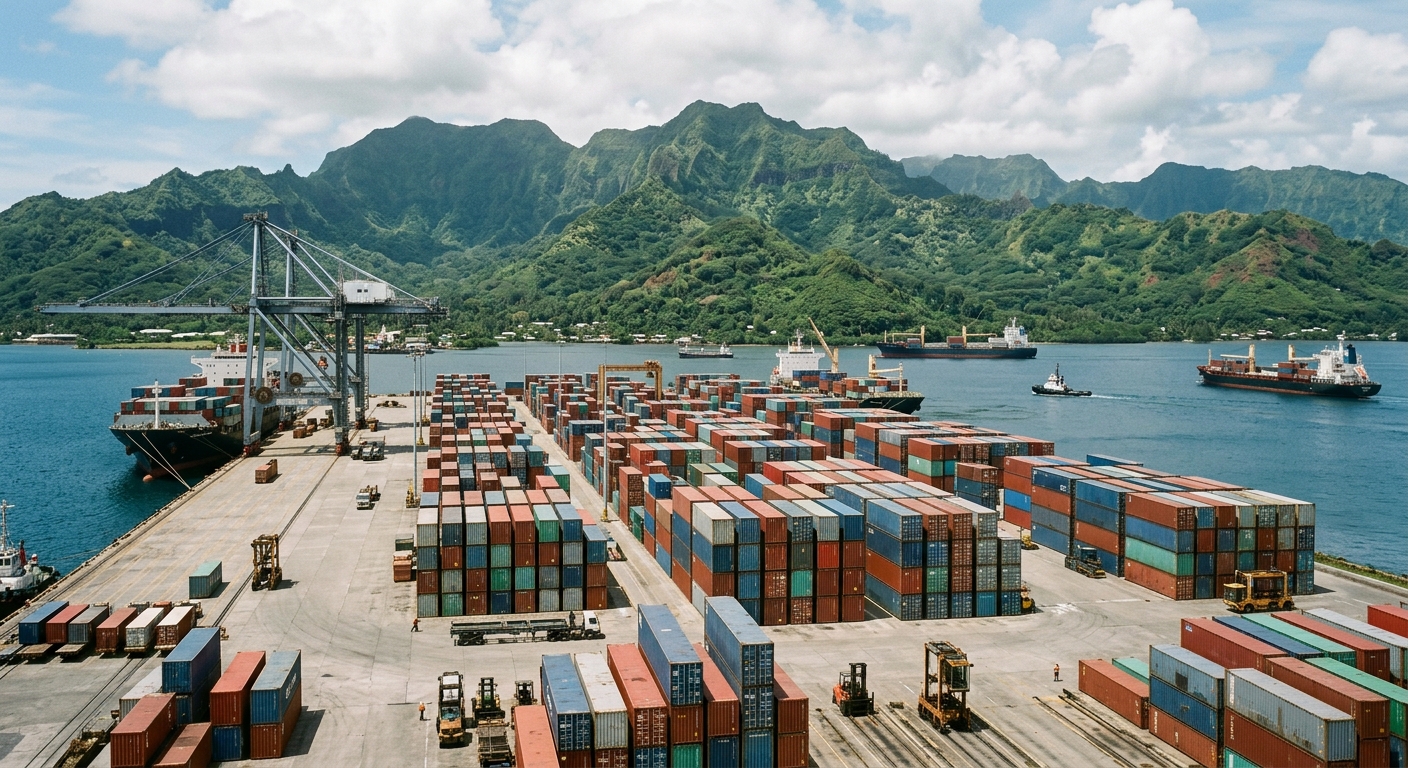
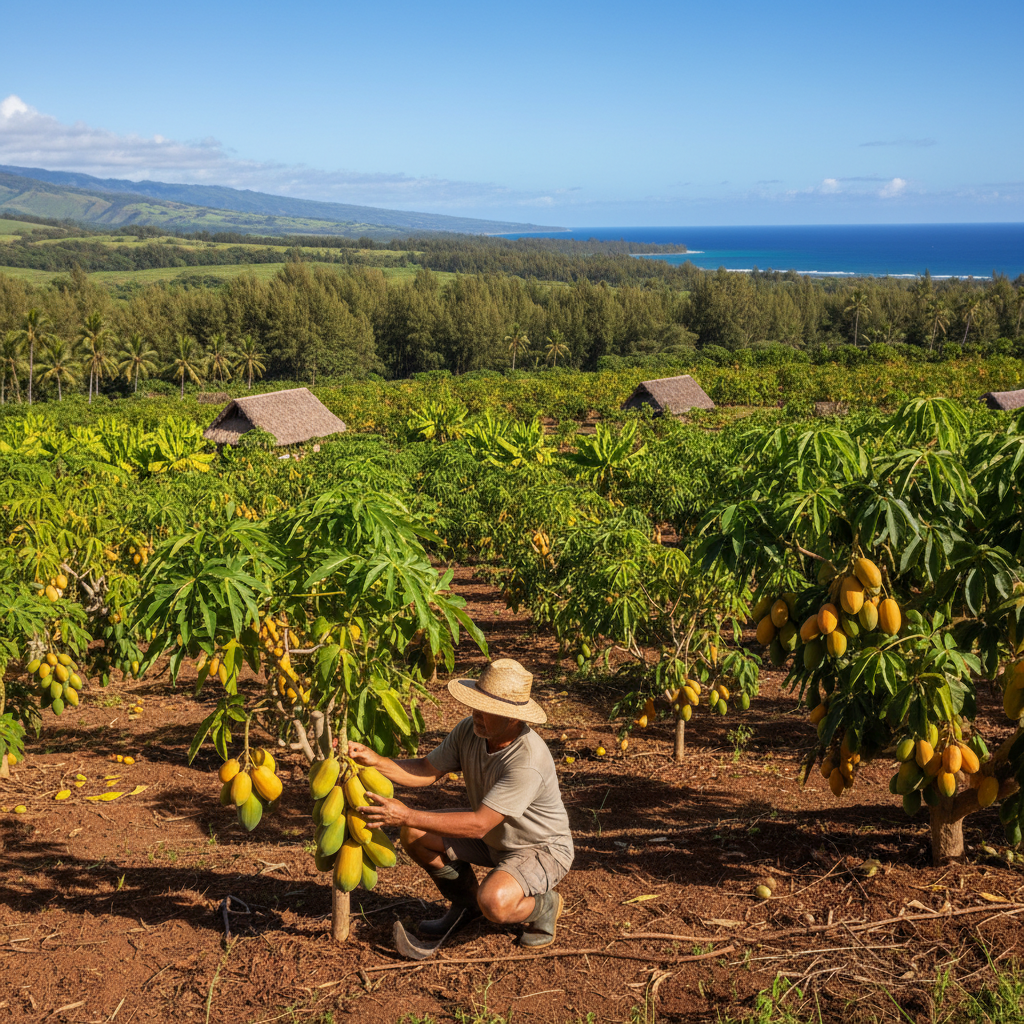
Hawaii’s agricultural sector has faced significant turbulence in 2025, shaped by the dual pressure of global tariffs and reduced federal support. Known for its niche crops like coffee, macadamia nuts, and tropical fruits, Hawaii’s small to mid-sized farms are grappling with higher input costs and unstable export channels.
Federal funding cuts have also deepened the strain. Nearly $90 million in USDA-backed food system grants and agricultural extension programs have been suspended or eliminated statewide, forcing local cooperatives and food hubs to delay projects and reduce staff (The Week, April 2025).
In the broader Pacific, nations such as Fiji and Vanuatu have been hit by retaliatory tariffs from the U.S. following diplomatic disagreements. Fiji’s sugar exports now face a 32% tariff, while Vanuatu’s prized kava root—an essential agricultural product for the region—has seen a 22% duty, making them less competitive in U.S. markets (Reuters, May 2025).
These trade restrictions come at a time when Pacific Island economies are still recovering from the COVID-era collapse in exports. Farmers and rural communities are urging local governments to negotiate bilateral relief or explore alternative trade partners such as Australia and New Zealand, which continue to offer duty-free access.
Tourism Rebounds, but Costs Climb
Tourism in Hawaii remains one of the strongest sectors, but the recovery has become more complex. While overall visitor arrivals are nearing pre-pandemic levels—95% of 2019 numbers as of April 2025—industry leaders say the rising cost of imported goods is shrinking profit margins across the board.
Higher tariffs on foreign alcohol, food ingredients, and building materials have translated into more expensive menus, inflated hotel renovation budgets, and pricier tour packages. “The visitor experience hasn’t changed dramatically, but the cost of delivering it has,” said a Maui-based hotel operator. “And we can’t keep raising prices forever.”
In the Pacific Islands, including Samoa and the Solomon Islands, the tourism rebound is slower. Airfare inflation and currency fluctuations are keeping many long-haul travelers away. Current estimates place regional tourism at about 88% of 2019 levels, with large events and cruise schedules acting as the main catalysts for recovery (Pacific Island Times, 2025).
Technology & Supply Chains: Growth with Caution
Hawaii’s growing technology sector—particularly clean tech and remote health startups—is beginning to feel the weight of global trade tensions. Tariffs on semiconductors and other critical components have delayed project timelines and increased operating costs for local firms, many of which rely on imported hardware from Asia.
Connectivity in the outer Pacific remains a challenge. For island nations, the high cost of undersea cable infrastructure and satellite equipment is only rising under new U.S. and Chinese trade restrictions. This threatens to widen the digital divide between Hawaii, which is relatively well-connected, and smaller Pacific nations still pushing for widespread internet access.
To address this, regional coalitions are calling for international development support to boost digital infrastructure without further reliance on tariff-sensitive imports.
Strategic Response: Resilience Through Diversification
Faced with economic volatility, Hawaii and the Pacific region are placing greater emphasis on self-reliance and long-term diversification. In Hawaii, several counties are investing in locally sourced food systems, sustainable energy projects, and blue economy initiatives (fisheries, aquaculture, and ocean conservation industries) to lessen dependence on global imports and exports.
Meanwhile, countries like Tonga and Palau are fast-tracking discussions with Australia and ASEAN economies to stabilize export channels, especially for agricultural and handicraft goods. Australia’s recent commitment to preserve tariff-free access for Pacific exports provides a critical lifeline for several small island nations (Reuters, 2025).
Weathering the Trade Storm
While the economic future for Hawaii and the Pacific Islands in 2025 is uncertain, the region is showing signs of cautious adaptation. The realities of trade friction, rising costs, and global supply instability are prompting leaders to rethink economic strategy from the ground up.
Whether through domestic investment, regional cooperation, or structural reforms, island economies are aiming not just to endure—but to evolve. As one economic planner in Honolulu put it: “We’ve been weathering storms for generations. This one’s different, but not impossible.”