- calendar_today August 13, 2025
In 2025, commercial real estate (CRE) across Hawaii and the U.S. Pacific territories is experiencing a targeted but meaningful recovery. Unlike the mainland, where warehouse booms and office transformations dominate headlines, the island economies of Honolulu, Guam, and American Samoa are being reshaped by a trio of forces: tourism recovery, military spending, and climate-resilient infrastructure development.
While geographic constraints, shipping costs, and limited land remain enduring challenges, the strategic location and growing federal focus on Indo-Pacific security have brought new capital and attention to these often-overlooked commercial markets.
Tourism Rebounds, Retail and Hospitality Follow
In Hawaii, 2025 marks a near-complete rebound in international and domestic tourism. The islands welcomed over 10.2 million visitors in 2024, with projections indicating a return to pre-pandemic levels by the end of 2025.
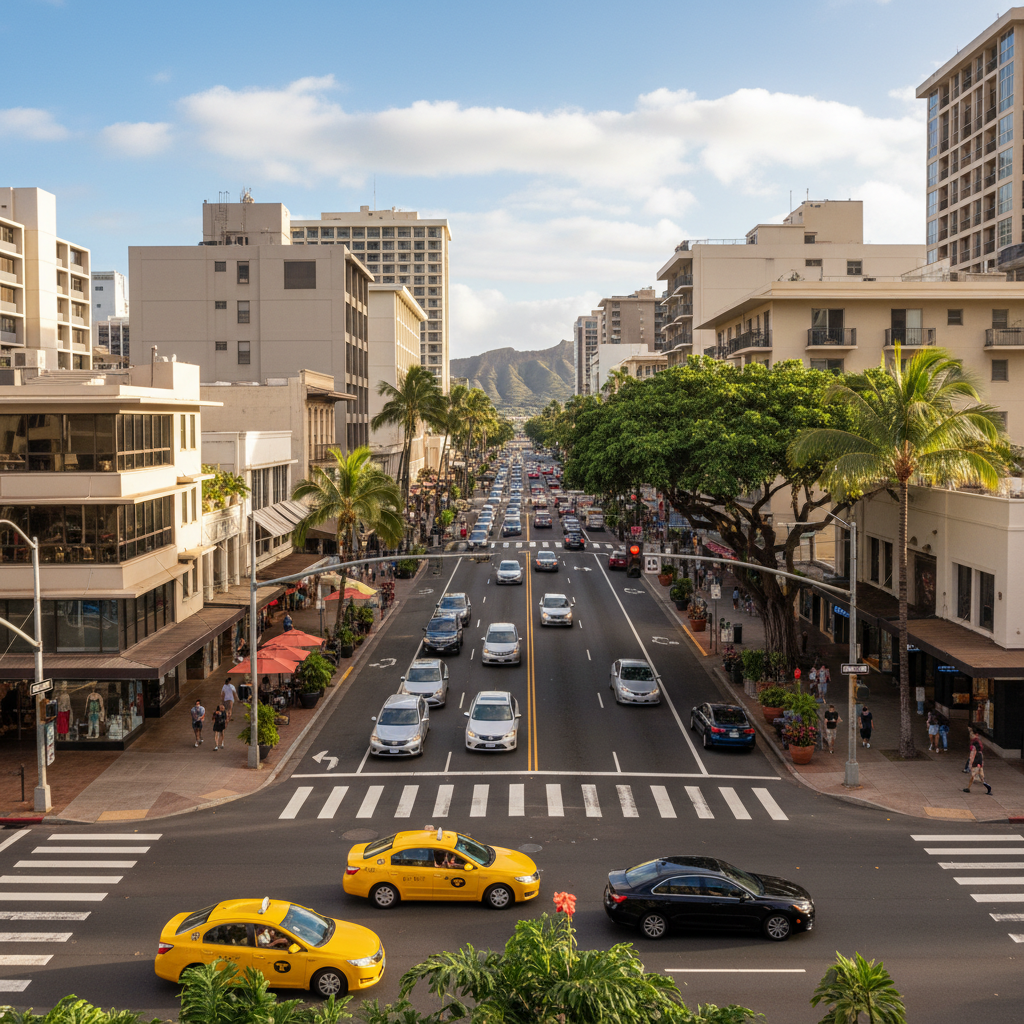
This surge is translating directly into retail leasing gains and hotel redevelopment. Waikiki, Honolulu’s prime hospitality zone, has seen rising interest in adaptive reuse projects—converting older resorts and mid-tier hotels into lifestyle-driven accommodations and mixed-use developments. Brands focused on wellness, eco-tourism, and cultural heritage are thriving, supported by the Hawaii Tourism Authority’s push for sustainable travel.
In retail, demand is up for open-air centers and convenience retail. Ala Moana Center in Honolulu, one of the largest open-air malls in the world, reports 95% occupancy. Meanwhile, areas like Lahaina in Maui are rebuilding cautiously after the 2023 wildfires, balancing tourism revival with local housing and zoning concerns.
Guam and Saipan, major tourism centers in the Western Pacific, are also showing signs of recovery as flights from Japan and South Korea ramp up. International hotel chains are re-entering these markets with smaller, flexible hospitality concepts and family-focused resort offerings.
Military Investment Driving CRE Expansion in Guam
Guam stands out in 2025 as a Pacific military hub undergoing rapid transformation. The U.S. Department of Defense is investing over $8 billion in the island’s strategic capabilities, including upgrades to Andersen Air Force Base and the construction of new training and logistics facilities for the U.S. Marine Corps.
This defense-driven growth is a major catalyst for industrial and housing-related CRE activity. Contractors and subcontractors are leasing warehouse space near the Port of Guam, while temporary and long-term housing developments are expanding in Dededo and Tamuning to accommodate military families and personnel.
Commercial land around the military footprint has become more valuable, attracting logistics operators, construction firms, and even educational institutions expanding technical training campuses aligned with defense needs.
Multifamily Development and Workforce Housing: A Pressing Need
In Hawaii, the shortage of affordable housing continues to dominate both the political and commercial agenda. With median home prices in Honolulu exceeding $900,000, multifamily housing is in urgent demand across all islands.
Developers are focusing on high-density, mid-rise apartment projects in Oahu’s western suburbs like Kapolei and Ewa Beach. Honolulu’s transit-oriented development zones (TODs) along the new Skyline rail route are receiving significant attention for mixed-use, affordable housing partnerships.
State incentives such as 201H exemptions and low-income housing tax credits (LIHTC) are accelerating multifamily approvals, particularly for senior housing and teacher housing complexes. However, rising construction costs and land constraints still limit supply.
In American Samoa and the Northern Mariana Islands, housing for government workers, healthcare staff, and returning residents is a top CRE priority. Public-private partnerships (PPPs) are being deployed to deliver mid-scale apartment buildings and mixed-use zones near key services.
Industrial and Logistics: Island Constraints, Global Demand
Industrial real estate remains constrained across the Pacific region due to limited land, high building costs, and reliance on maritime imports. Still, demand is growing for distribution and cold storage facilities in both Honolulu and Guam.
Honolulu’s industrial vacancy rate is below 3% in 2025, as food distributors, logistics firms, and solar equipment suppliers compete for warehouse space. The area around Sand Island and Kalihi remains key, though West Oahu is emerging as an expansion zone due to lower land prices and better highway access.
In Guam, logistics activity is intensifying near Tiyan and Harmon. With the military build-up underway, demand for staging areas and equipment storage is outpacing supply. Government leases are locking in long-term contracts, and some private developers are pursuing ground leases for pre-engineered metal warehouse builds to speed delivery timelines.
Office Sector: Stability Over Speculation
Unlike larger mainland markets, the office sector in Hawaii and the Pacific islands has remained relatively stable due to its smaller scale and heavy dependence on government, military, and healthcare tenants.
Honolulu’s office vacancy rate stands at about 11%, with downtown and Kaka‘ako holding firm. There’s limited new construction, but Class B renovations are increasing as landlords upgrade older buildings for medical or nonprofit use. Coworking operators catering to small legal, travel, and consulting firms are thriving in areas like Ala Moana and Waikiki.
In Guam and American Samoa, most office leasing is government-driven. U.S. federal agencies, local departments, and NGOs are seeking modernized spaces for disaster planning, climate adaptation, and social services, increasing demand for modestly scaled, well-located office buildings.
Climate-Resilient CRE: Building for the Long-Term
Climate resilience is no longer optional in Pacific CRE. In Hawaii, strict building codes and shoreline setback requirements are shaping new projects, particularly in coastal zones.
Developers are using elevated foundations, solar PV integration, and water recycling systems to meet both regulatory requirements and public expectations. Honolulu’s “Resilience Office” now works directly with real estate stakeholders to identify sea level risk zones and incentivize adaptation through zoning bonuses and expedited permitting.
In Guam and the Northern Mariana Islands, recent typhoons have prompted investment in hurricane-hardened infrastructure. New government and healthcare buildings must now meet FEMA design standards, boosting demand for specialized architectural and construction firms.
Investment Trends: Local Partners, Long-Term Plays
In 2025, CRE investment in Hawaii and the Pacific region is largely relationship-driven. Institutional capital is present but cautious, often partnering with local developers who understand the permitting processes, cultural nuances, and environmental risks.
Family offices and real estate investment trusts (REITs) are active in hospitality, retail redevelopment, and low-risk office conversions. ESG-focused investors are particularly interested in projects tied to renewable energy, waste reduction, or community-led planning.
Land scarcity means most growth is through repositioning or redevelopment. In Hawaii, land trusts and nonprofits are also increasingly partnering with private firms to deliver housing, education, and small-scale retail projects.
Final Snapshot
Hawaii and the Pacific CRE markets are recovering not with speed, but with purpose. 2025 marks a turning point: one where tourism rebounds, military investment reshapes island economies, and developers confront climate risk head-on. Across Honolulu, Guam, and the U.S. territories, commercial real estate is less about expansion and more about sustainability, adaptation, and strategic development. The islands are charting their own course—weathered by geography, but strengthened by vision.