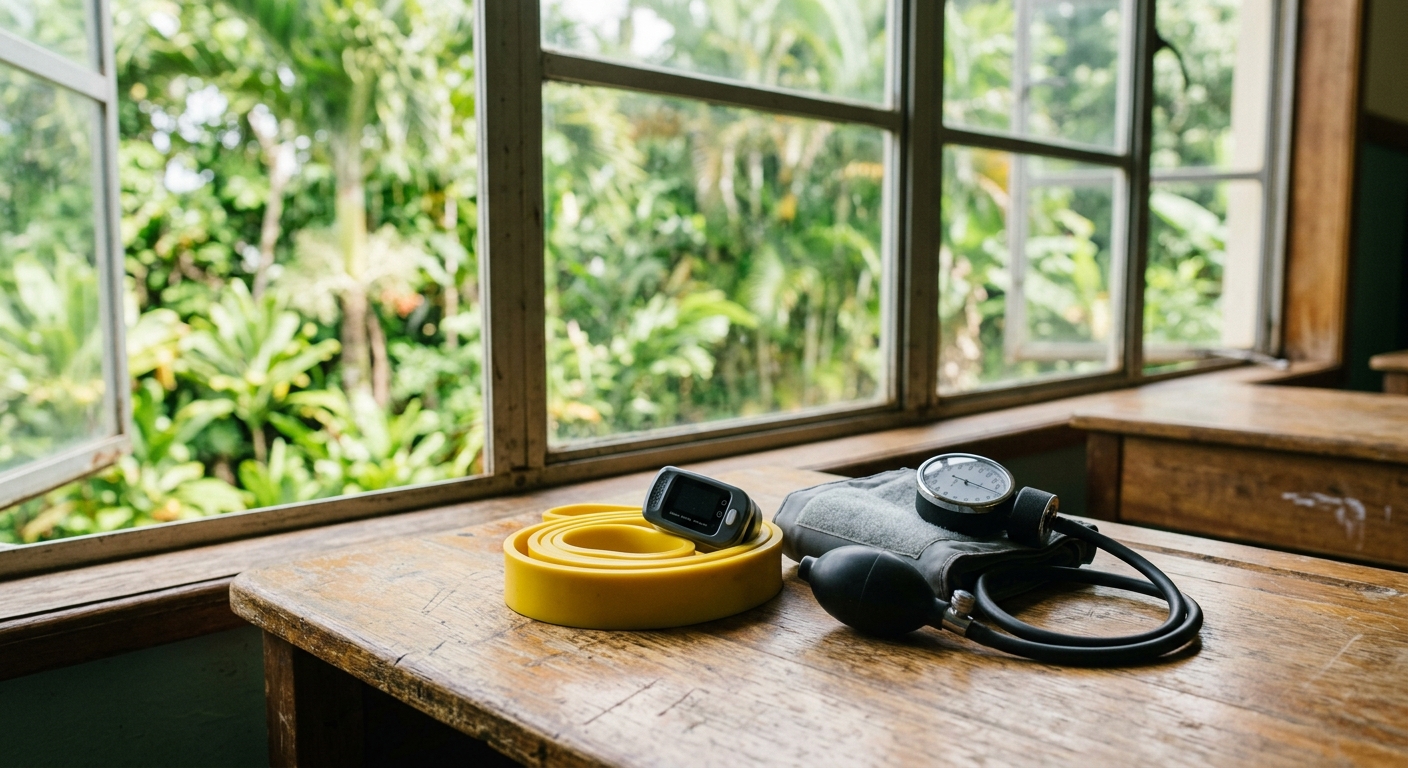
AI-generated illustration; not a photograph of the reported event.
- calendar_today November 24, 2026
Kaʻu Teacher Joins Space for Teachers Research Flight
Chayanee Brooks, an educator from Kaʻu High and Pahala Elementary Schools, recently participated in scientific research aboard an AirZeroG parabolic flight in Bordeaux, France. The flight was part of the esteemed Space for Teachers (SfT) Embedded Teacher Program, a year-long initiative that connects educators with hands-on aerospace research.
Selection for a Prestigious Program
Brooks was among just 15 educators nationwide chosen for this year's highly competitive SfT program. A recognized leader in her field, she is a National Board Certified Teacher, a Hawaii State Teacher Fellow, a Pulitzer Center Teacher Fellow, and was named the 2023 Kaʻu-Keaʻau-Pāhoa Complex Area teacher of the year. Brooks is currently a doctoral candidate in neuroscience and focuses on interdisciplinary teaching, connecting literature, environmental issues, and space science with a distinctive Hawaiian perspective.
Zero Gravity Experiments: Focusing on the Human Heart
The main thrust of Brooks’ research was to examine how the human heart adapts to exercise in different gravity conditions. Over the past year, Brooks has incorporated resistance band training into her routine, conducting these exercises under normal gravity while her students recorded her heart rate, blood pressure, oxygen levels, and other vital signs to establish baseline data.
During the AirZeroG flight, the Airbus A310 executed repeated parabolic arcs, generating up to 22 seconds of weightlessness during each cycle. Brooks performed her resistance band exercises while sensors closely monitored her physiological response, allowing for direct comparison between normal gravity and microgravity exercise results.
Student Engagement and Next Steps
Brooks’ students played an integral role in developing and refining the experiment. They collaborated over the course of a year to test the experiment for scientific and engineering rigor with support from SfT advisers. Following the flight, students will now analyze the data gathered in zero gravity and produce a documentary film, connecting the scientific findings with broader human experiences in microgravity environments.
Broader Implications for Space Research and Education
The physiological data from Brooks’ research will contribute to the ongoing development of countermeasures against the negative health effects of long-duration weightlessness experienced during space missions. The Space for Teachers nonprofit collective, composed of educators, scientists, and artists, aims to foster increased student engagement in aerospace and STEM fields. Since its inception, the Embedded Teacher Program has enabled over 50 educators and students to conduct parabolic research flights.
Reflecting on her experience before the flight, Brooks shared her excitement: "Because this is not a computer simulation. It's real moments of weightlessness. And to be able to experience this first hand, I think it's a dream come true. And so being able to experience this first hand and bringing it back to my students in Hawaii and in Kaʻu is going to be unforgettable."
Source: westhawaiitoday.com.