- calendar_today August 17, 2025
If you asked a politician, journalist, or social scientist what the three most likely causes of a country’s problems were, the list would include untruths, conspiracies, and rumors. And if you looked around the world for the kinds of claims that most excited populist outrage, the same categories would likely apply. Conspiracy theories are an old social disease, and their vectors are as present as ever.
President Donald Trump’s recent description of wind turbines as a “con job” that drives whales “loco,” kills birds, and electrocutes people is another chapter in that history. The attacks are so routine as to be mostly theater. Trump used the occasion of what was billed as a press conference about an EU trade deal to trash the clean energy source that other world leaders have embraced.
If it were just Trump, it would be easy to dismiss. But his comments are one part of a global pattern of hostility and suspicion toward renewables. Conspiracy theories about wind farms have emerged not just in the U.S. but also in Brazil, Germany, India, Nigeria, and a dozen other countries. In the U.S., Trump is far from the first politician to sound the alarm about green energy or invoke the specter of industrial wind turbines. It is symptomatic of a view of the world.
In previous centuries, he might have called them windmills. Even today, it is shorthand among some climate deniers and conspiracy theorists who are averse to wind turbines. In the past, the moral panics that accompany technological change have been many and varied. In the 1800s, it was the belief that telephones could spread disease, for example.
Technology and the power structures it can challenge have a way of provoking a sense of threat in individuals and communities, particularly when those changes have been rapid or forced people to adjust in ways they feel are unfair. However, evidence also shows that these sorts of anxieties, once entrenched in a person’s worldview, are resistant to attempts to correct or rebut them by fact-checking or citation of scientific authorities.
That is an existential problem for governments, businesses, and institutions struggling to speed up the transition to clean energy.
Anti-Wind Conspiracy Theories Are Deeply Rooted
Climate science has been warning for at least the 1950s that CO2 emissions could cause major and relatively imminent environmental impacts. The early renewable energy campaigns have been mostly framed as a way to check the power of fossil fuel companies, the financial and literal power of which fossil fuel divestment campaigners are trying to challenge today.
A famous popular culture example comes from an episode of The Simpsons from the late 1990s, in which tycoon Mr. Burns builds a tower that blocks the sun and forces the residents of Springfield to buy his nuclear power instead. The cartoon parable was an over-the-top satire, but it reflected a widely held concern at the time—that fossil fuel interests would work hard to stop renewables taking hold.
History has proven those fears were well-founded. In 2004, then–Australian prime minister John Howard created the Low Emissions Technology Advisory Group, under the auspices of which a collection of fossil fuel executives collaborated 2004 on the question of slowing down renewables growth to protect coal, oil, and gas.
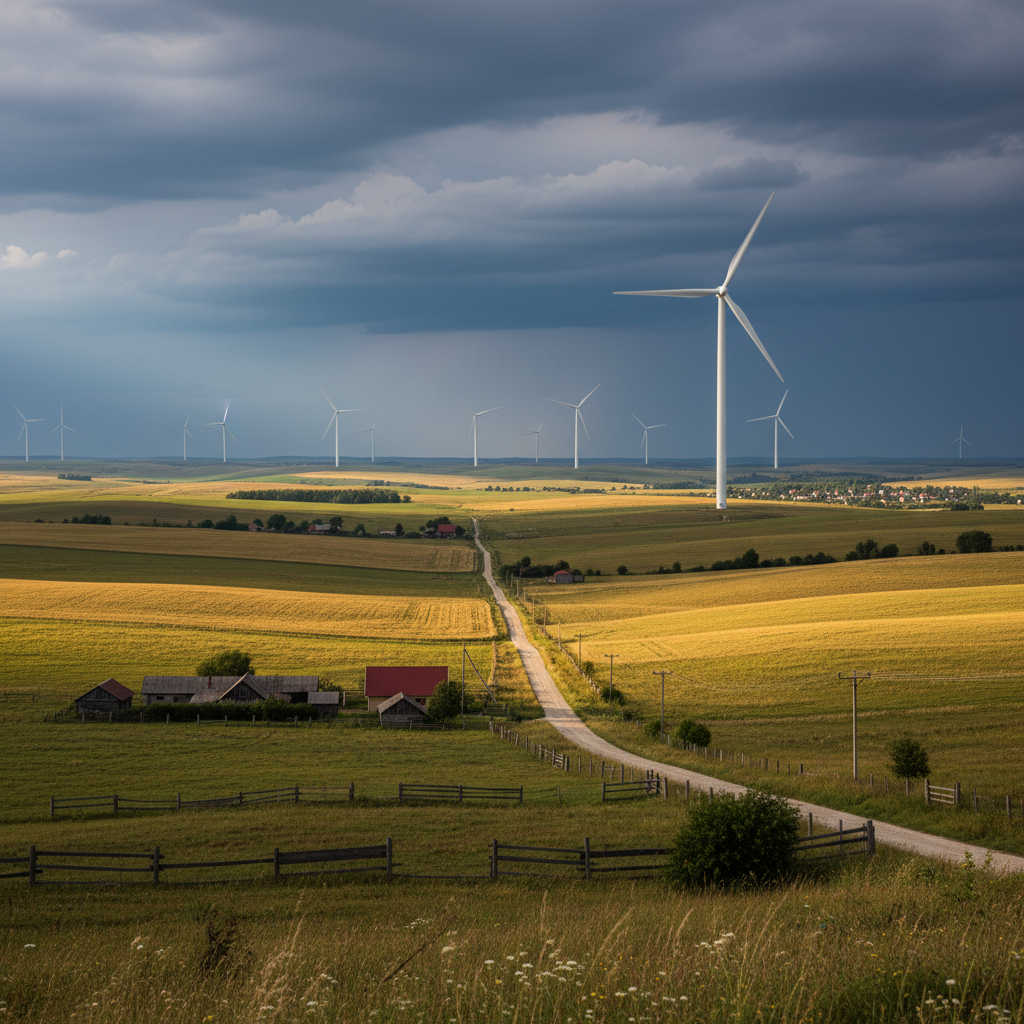
Wind farms themselves have also become public-facing symbols of the transition to clean energy. People drive by oil fields, coal mines, and nuclear plants, but wind turbines are conspicuous and are often put on ridgelines or on plains where they are highly visible. Windmills have become easy targets for conspiracy theorists.
One recurrent conspiracy theory was a phenomenon referred to as “wind turbine syndrome.” Doctors called it a “non-disease” that, despite being associated with nausea, depression, and muscle pain, had no evidence to support its existence.
Academic research has helped explain how opposition to wind farms has more to do with belief systems and demographics. A study led by Kevin Winter in Germany found conspiracy thinking to be a far better predictor of opposition to wind projects than age, gender, education level, or political alignment.
Similar conclusions were made in a more recent study involving surveys in the U.S., U.K., and Australia. It found that people who were predisposed to believe in conspiracies, be they about climate change or the weather, or the power sector, were also more likely to support beliefs that wind farms are bad for the environment and people’s health.