- calendar_today August 25, 2025
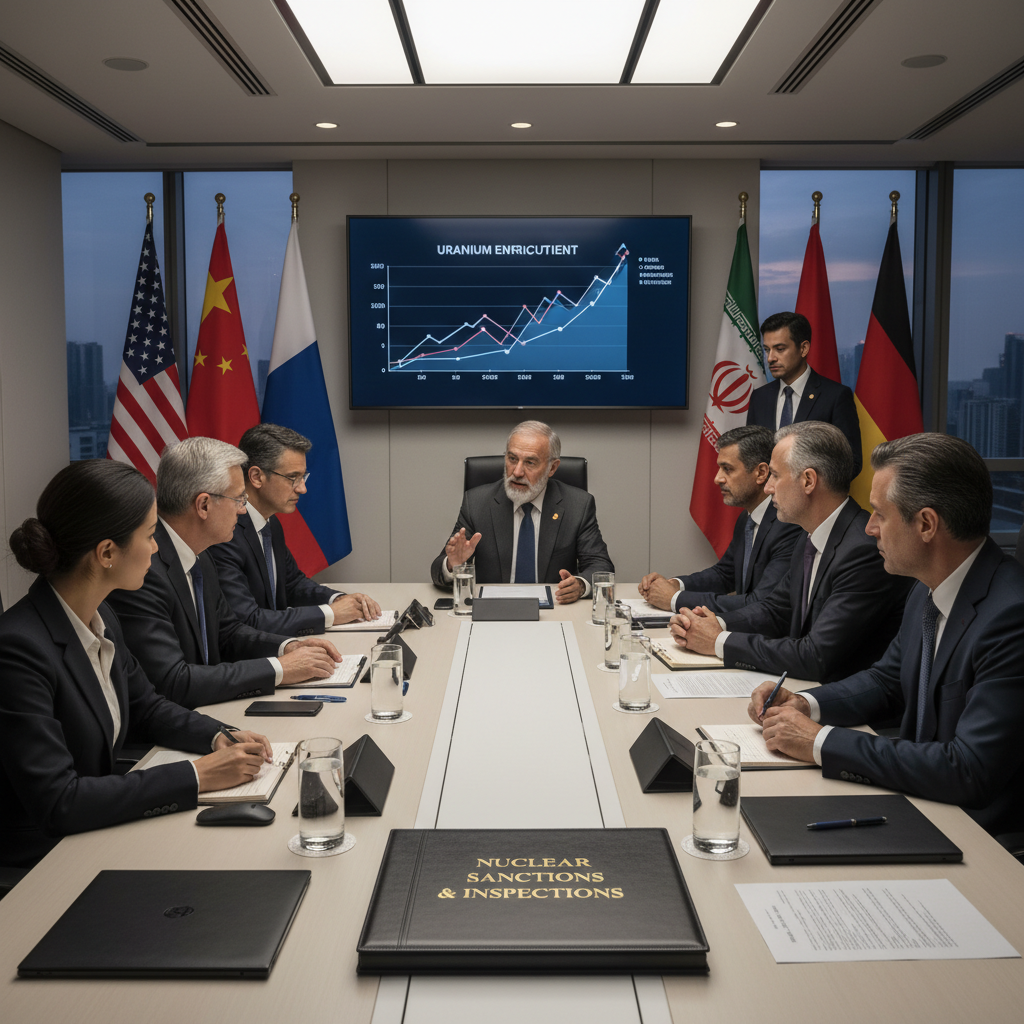
Three European officials told CNN on Wednesday that Germany, France, and the United Kingdom plan to announce the reimposition of United Nations sanctions on Iran on Thursday, setting in motion the so-called “snapback” mechanism established in the 2015 Iran nuclear deal.
Iran Threatens Retaliation Over Potential Snapback on Nuclear Sanctions
The sanctions would then be reimposed 30 days later if Iran has not met Europe’s demands, so there is a short window for diplomacy before snapback is triggered.
European leaders have said they hope Iran will use the 30 days to reengage in serious diplomacy, open up its facilities to international inspectors and take other steps to comply with its nuclear obligations.
Iran has threatened severe retaliation if the sanctions are reimposed, raising fears of further instability in the region after last month’s devastating war.
Snapback Under JCPOA
Snapback, or the “termination provision,” is part of the Joint Comprehensive Plan of Action, or JCPOA, the nuclear deal negotiated by Iran and six other countries in 2015, which has been further negotiated in the years since former President Donald Trump withdrew from it.
The provision allows members to trigger the reimposition of UN sanctions against Iran for violations of the deal. Snapback was negotiated under the Nuclear Non-Proliferation Treaty (NPT), which Iran remains a signatory of, allowing IAEA inspectors access to its nuclear facilities.
Iran has since violated the terms of the JCPOA by accelerating its nuclear development since the United States left the agreement, although it has maintained the program is for peaceful energy purposes.
Snapback authority expires in October.
Iran’s Nuclear Program Under IAEA Inspection
Inspectors warn the country’s program is growing closer to weapons-grade.
“Iran has never been so far from compliance with its safeguards obligations as it is today,” Rafael Grossi, director of the International Atomic Energy Agency (IAEA), said Wednesday.
“Going back to the original JCPOA would be almost impossible,” Grossi said Wednesday.
However, Grossi said “there is a very important window that is now open, in which de-escalation and diplomacy can still be present.”
Rubio, who met with European counterparts this week in closed consultations over the snapback, called the provision “a very powerful piece of leverage on the Iranian regime.”
IAEA Inspectors Back in Place
Iranian legislation to end cooperation with international inspectors
The IAEA’s safeguards are enshrined in the NPT, and analysts have said Iran could withdraw from the NPT if snapback is triggered.
Iran’s parliament passed a bill in late July ending cooperation with the IAEA following the June war between Iran and Israel. However, Grossi said this week that inspectors have been allowed back into Iran to monitor some aspects of its nuclear program, including the Bushehr nuclear power plant, which was damaged during the conflict.
“There is an understanding with Iran,” Grossi told reporters in Washington. “Today we are inspecting Bushehr. We are continuing the conversation so that we can go to all places, including the facilities that have been attacked.”
Grossi said the IAEA has agreed to delay publication of a report on Iran’s safeguards violations for up to two weeks while IAEA inspectors are back on the ground at nuclear sites.
Iranian Foreign Minister Abbas Araghchi, who also addressed reporters Wednesday, said inspectors were at Bushehr only to monitor the replacement of fuel at the plant. Araghchi did not deny new cooperation with the IAEA.
The IAEA withdrew its inspectors from Iran in July, with Grossi saying the war made it impossible for the agency to do its work.
Israeli Attack on Iranian Nuclear Facilities
Israel launched a strike on Iran’s nuclear facilities in June, which led to a 12-day war. Iran responded with attacks against Israeli cities, and U.S. forces joined the fray, striking three Iranian sites in the last days of the conflict.
A month later, Grossi said the war had “totally hampered” the IAEA’s ability to monitor Iran, and satellite imagery later showed at least two entrances to the Isfahan Nuclear Technology Research Center had been damaged by explosions.
Iran has accused the IAEA of providing Israel with the justification it needed to strike the sites by publicizing Iranian non-compliance with IAEA safeguard rules.
Iran’s Political Division Over Inspection Resumption
Iran has faced domestic criticism from members of parliament over its decision to allow inspectors back into at least one site.
Iran’s parliament had passed the legislation ending cooperation with the IAEA in the wake of the Israel war, with lawmakers saying Iran was under attack and the IAEA was biased.
Parliamentary member Kamran Ghazanfari condemned comments by Speaker Mohammad Bagher Ghalibaf last week on limited inspections as an “explicit violation” of laws suspending IAEA cooperation.
Iran’s IAEA Negotiator Holds Talks With U.S. Envoy In Bid to Avoid Sanctions Snapback
Negotiations were also held in Geneva on Tuesday in last-minute talks between European and Iranian officials.
European Union envoy Enrique Mora, the negotiator, met with Iranian delegates on Tuesday and again on Wednesday. However, sources familiar with the matter said progress was not made in Geneva.
US envoy Witkoff, as well as Grossi, also met with Iran’s Araqchi last week to discuss the program and next steps on a new nuclear deal. Those talks were cut off with the start of the conflict.
Negotiations Continue On New Iran Nuclear Deal
Rubio spoke at the U.S. Senate Foreign Relations Committee on Wednesday.
Rubio’s predecessor, Antony Blinken, said before his confirmation that he wanted a new Iran deal negotiated by the end of the year.
Rubio, now Secretary of State, is keeping an open mind on negotiations and has been closely coordinating with his European counterparts over next steps, aides said.
Witkoff had been working with Grossi and the IAEA on a new deal ahead of the conflict.
Grossi Continues Optimistic Diplomacy
The IAEA chief, speaking ahead of Wednesday’s meeting with Araqchi, said time was still on the side of those seeking a peaceful resolution to the Iranian nuclear crisis.
“Iran is in a very difficult situation,” he said. “It should not be forgotten that there is still time, even if there is the triggering thing, there is a month, and many things could happen.”
Grossi’s comments echoed those of others in the European establishment, who have also pushed back hard against the notion that snapback would be the end of the road in terms of negotiating with Iran on its nuclear program.
German Foreign Minister Annalena Baerbock said on Wednesday that while snapback will likely be triggered, there would be a month to seek a diplomatic resolution before the sanctions are reimposed.