- calendar_today September 3, 2025
As banks around the world gear up to automate their staff, the largest lender in Australia is being made to eat humble pie. The Commonwealth Bank of Australia (CBA) has been ordered to rehire 45 staff after previously asserting that their positions had been made redundant by the arrival of artificial intelligence (AI). The volte-face comes in response to a union claim that the bank duped workers and the public over the efficacy of its new chatbot.
The saga began several weeks ago, when CBA informed long-standing members of its customer services team that they had been made redundant. The move came after the bank’s rollout of an AI-powered “voice bot”, which had reportedly halved incoming call volumes by around 2,000 per week, leaving the bank with “insufficient work” for so many human operators. The redundancies were initially described as being part of a broader cost-cutting drive within the customer services division.
The customers affected by the layoffs were mostly long-serving employees, some of whom had worked at the bank for over 20 years. They were dealt a second blow when the bank went on to say that their new chatbot was only available during business hours and could not support elderly Australians or those on rural fixed lines. It was also noted that this was a “new service” and would not immediately replace human workers.
While all of that was technically true, the disgruntled employees protested that something didn’t quite add up. Not only did they say incoming call volumes were actually increasing at the time of the layoffs, but senior management was also widely reported to have been “sending managers to help take calls” and encouraging existing staff to work overtime. Even if the automation was to be expected, the rollout was clearly being rushed before the new service was ready to take over from humans.
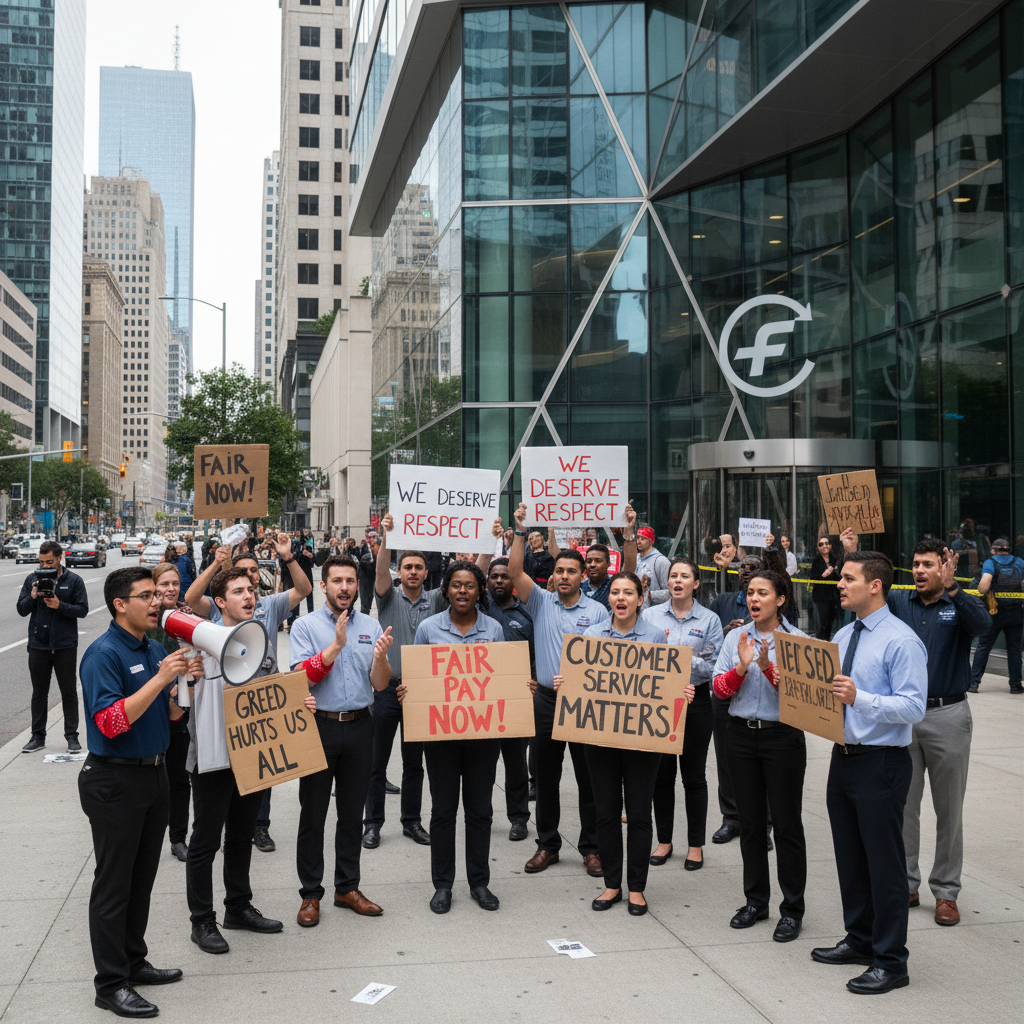
The union decided to take CBA to a fair work tribunal, which has now found that the bank was in the wrong. The Finance Sector Union (FSU) alleged the bank hadn’t given a satisfactory explanation of how those positions were rendered redundant. The union also alleged CBA was using its AI chatbot as a pretext to offshore some of those roles to India, suggesting it had hired new workers there at the same time. In any event, the point is that CBA claimed this was not the case.
In its submission to the tribunal, the Commonwealth Bank appeared to admit its argument was flawed, conceding that its business case for the redundancies had been based on a flawed analysis. The bank’s representatives stated it was true that “short-term spikes in call volumes were not taken into account”, meaning the decision to make people redundant was “unfair”. These call spikes, amounting to 2,000 extra calls a day, coincided precisely with the planned redundancies and continued for months.
The bank has since made a humiliating climbdown. It has apologized to its affected workers and stated that all 45 would be offered the chance to return to their old positions, redeployed to other vacancies at the bank, or given an exit package. “The employees have been offered new positions with the bank, and we will pay for any financial loss they have suffered as a result of this situation”, a CBA spokesperson told Bloomberg.
The FSU has said the decision is a “massive win” for its members. However, the union also noted that it was “hard to win a case against your job” and many workers had already suffered. The drawn-out nature of the case had created anxiety, and in some cases, the very real prospect of being unable to afford to pay the bills. The case has been used by the FSU as a warning against the rapid roll-out of AI and other technological changes without consulting workers.
It has not stopped CBA from pressing ahead with other AI initiatives. Last week, the bank announced a collaboration with the AI company OpenAI. The joint initiative will see both companies partner on generative AI tools, which are set to be “sharper, faster, and more secure”. This technology will be used to further enhance scam detection capabilities, protect against fraud, and deliver more personalized customer service. While the CBA said that this deal was part of a broader plan to support its staff and create more AI jobs, many bank workers were less than convinced.
The case could be an early example of a growing trend. Bloomberg Intelligence estimates that between 150,000 and 200,000 jobs could be lost to automation and AI in banking globally in the next 3 to 5 years. This applies to both back office and middle office positions, as well as more general operations and administration roles. Banks are using AI as a tool to cut costs and streamline workflows. However, as shown by the CBA case, overreaching and poor change management can easily sow distrust among customers and staff alike.
For now, the 45 CBA employees at the center of the action will have to decide whether to accept their jobs back. The FSU suspects many will choose the option of leaving with a package, and their trust in the bank has clearly been shaken. The union said the case “sends a warning shot to workers that no role is sacred and that they, too, can be caught out when banks move with little regard for the impact on workers”.