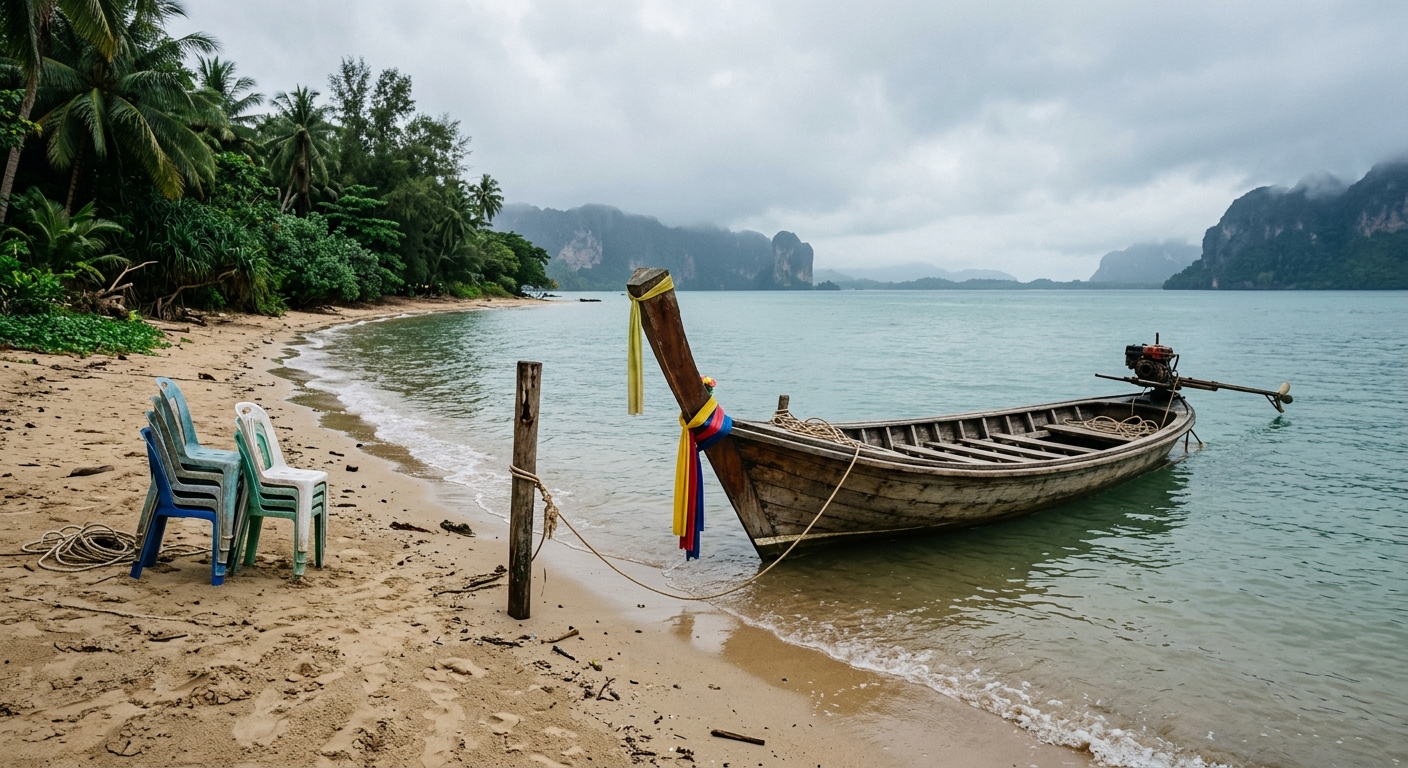
AI-generated illustration; not a photograph of the reported event.
- calendar_today August 4, 2026
The vital southeast asia tourism sector, a significant driver of economic growth for both the region and distant Pacific locales such as Hawaii & Pacific, is experiencing unprecedented challenges due to ongoing tensions between the United States and Iran. As the geopolitical conflict persists, ripple effects have reached well beyond the Middle East, causing steep declines in international visitor numbers and threatening the livelihoods of millions who depend on the tourism industry.
Tourism Decline Strikes Core Destinations
Among the hardest hit is Cambodia, where cambodia tourism has seen a dramatic 45% reduction in tourist arrivals during the first quarter of the year. Cities like Siem Reap—once bustling with visitors flocking to Angkor Wat—now witness empty streets and struggling businesses. Local workers such as tuk-tuk driver Khon Mony report daily earnings falling to less than a quarter of what they were prior to the conflict’s escalation. These hardships have forced families across urban and rural communities to reevaluate their basic needs and search for supplementary income streams.
Thailand’s Hospitality Sector Faces Uncertainty
A similar picture has emerged in Phang Nga province, a jewel of thailand tourism in southern Thailand. Hotel bookings have been cut in half compared to expectations, leaving boat operators, tour guides, and small hospitality businesses facing an uncertain future. The reduction in bookings is attributed primarily to the absence of European tourists, who have traditionally formed a substantial portion of the clientele. With fewer visitors, tourism decline is now posing a real threat to the sustainability of many businesses in the region.
Bali Feels the Pressure Despite Alternative Markets
Elsewhere, bali tourism has proven somewhat more resilient, thanks to continued traffic from Australian and Chinese travelers. However, business owners and local authorities remain concerned about the sustained absence of European tourists and the broader implications of global travel disruptions. As many visitor-dependent enterprises seek to adapt, questions loom about how long the region can stave off the deeper impacts seen elsewhere in Southeast Asia.
Far-Reaching Effects of Iran War Impact
The iran war impact is reaching far into the daily lives of tourism workers throughout Southeast Asia. Stable jobs in hotels, transport, and hospitality are disappearing, with far-reaching consequences for local economies. The mounting financial pressure is also evident in neighboring Pacific communities, including Hawaii & Pacific tourism spots, where a drop in long-haul travel has mirrored trends emerging from Southeast Asia. The shared cross-regional reliance on tourism revenue underscores the breadth of the challenge.
Community Adaptations and Industry Responses
To counteract losses and address the ongoing tourism decline, tourism boards and local governments are focusing on attracting new visitor segments and encouraging domestic travel. Efforts to diversify marketing strategies aim to offset some of the setbacks, but with travel disruptions showing little sign of abating, many in the sector remain in survival mode. The vital tourism industry is recalibrating to promote lesser-known destinations and craft travel packages tailored to regional tourists.
Broad Economic and Social Impacts
The absence of european tourists goes beyond reduced hotel bookings and shuttered attractions; it reverberates through entire communities, affecting everyone from street vendors to artisans. The cascading effects on the local economy are visible in diminished retail activity and increased financial insecurity. Regional leaders warn that the negative impacts of these travel disruptions could endure unless stability is restored.
Looking Ahead: Pathways to Tourism Recovery
Although the conflict shows no immediate resolution, stakeholders are intensifying efforts to support the local economy and boost tourism recovery. Industry leaders in Southeast Asia and Hawaii & Pacific are collaborating on best practices to weather the crisis, focusing on health and safety adaptations and creative initiatives to build resilience. As governments, businesses, and workers adapt to new realities, fortifying the tourism industry remains a top priority for ensuring economic recovery and social well-being for communities throughout the region.