- calendar_today August 26, 2025
What’s Driving Dow Jones Futures in 2025?
Dow Jones Futures offer a pre-market read on investor sentiment, often signaling how Wall Street will open. For Hawaii and the U.S. Pacific territories, where tourism, federal spending, and global trade are foundational to the economy, these futures carry added weight. In 2025, investors across Honolulu, Guam, and American Samoa are contending with rising costs, uncertain travel recovery, and macro-level risks that echo across their local economies.
Economic Drivers Behind the 2025 Outlook
Economic recovery in Hawaii and the Pacific has slowed compared to the national average. Hawaii’s GDP growth is forecasted between 1.2% and 1.7% in 2025, below the U.S. range of 2.1%–2.4% (Bureau of Economic Analysis, DBEDT Hawaii). Pacific island territories face similar constraints, with rising energy and import costs tightening budgets and limiting discretionary spending.
- Inflation in Honolulu remains above the national average, with year-over-year rates around 3.8%—driven by housing, transportation, and utilities.
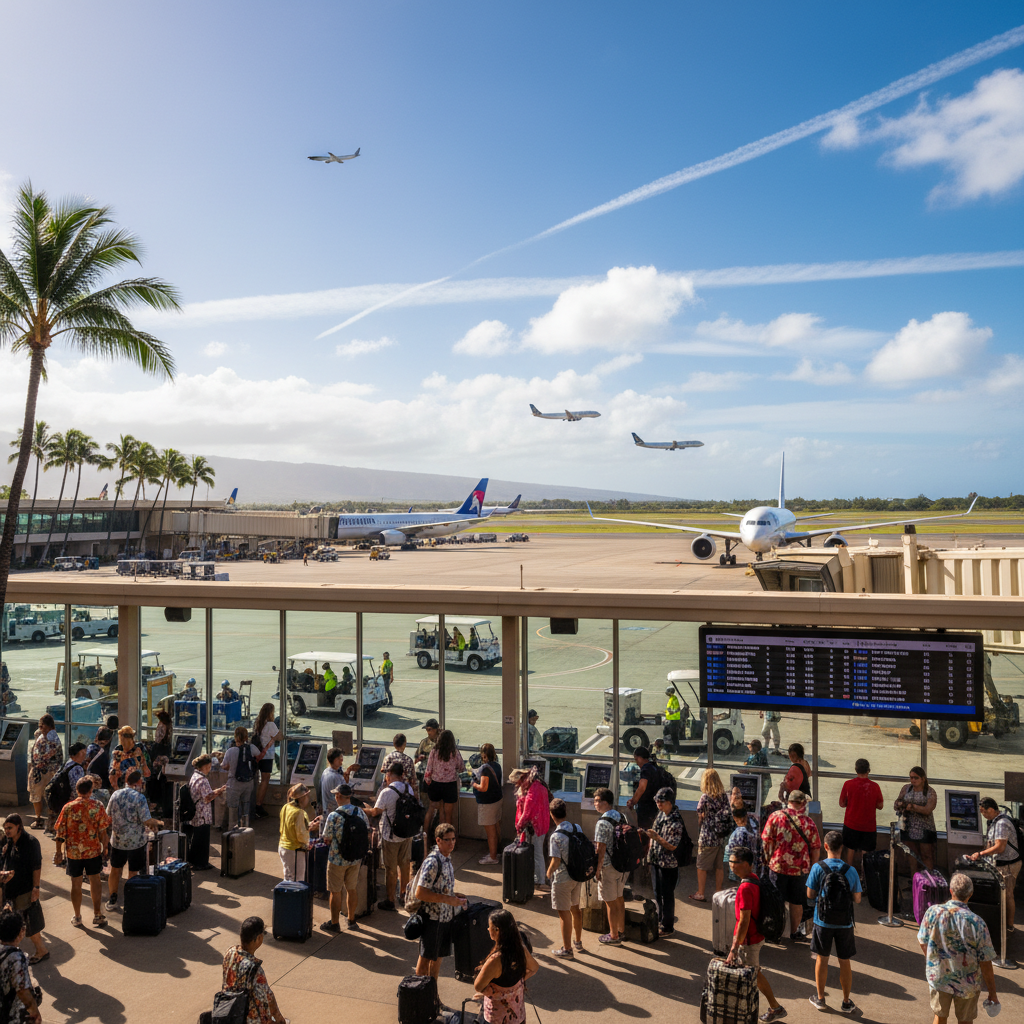
- Tourism, a cornerstone of Hawaii and Guam’s economies, is not expected to return to pre-pandemic levels until 2028, according to state projections.
- U.S. supply chain realignments continue to disrupt imports of key goods and drive up prices in remote island economies.
Federal Reserve Policy and Interest Rate Projections
Federal Reserve policy is especially relevant in regions dependent on federal funding and debt-financed development. High borrowing costs in 2025 are slowing construction and municipal investment across the islands.
- Current Fed Funds Rate: 4.25%–4.50%.
- A rate cut—potentially by September—is priced in at a 67% probability and could ease pressure on public budgets, housing developers, and businesses across Hawaii and the Pacific.
- However, inflation tied to global tariffs and fuel costs may delay the Fed’s decision.
Global Economic Uncertainty and Its Ripple Effects
International economic shifts impact Hawaii and the Pacific more than most U.S. regions. The local economies’ reliance on imports, tourism from Asia, and military spending makes them vulnerable to global shocks.
- New U.S. tariffs on Chinese and Brazilian exports (July 2025) are driving up costs for construction materials and imported goods across Hawaii and the Pacific Islands.
- China’s sluggish recovery is dampening tourism from key markets like Japan and Korea.
- Middle East tensions continue to push up oil prices, impacting aviation, shipping, and energy costs across the Pacific region.
Sector-Wise Breakdown: Tourism, Energy, and Healthcare
While the Dow Jones index broadly reflects national trends, several sectors stand out in Hawaii and the Pacific in 2025.
- Tourism remains below pre-pandemic levels. Airlines and hotel chains have scaled back capacity, and visitor spending is down significantly, especially from Asia.
- Energy costs remain elevated due to import dependence and regional fuel surcharges. Renewable energy investments are rising but remain years from scale.
- Healthcare continues to expand in response to demographic shifts, with demand for services growing in rural Pacific communities and across the islands.
Investor Sentiment: What the Data Tells Us
Investor sentiment across Hawaii and the Pacific reflects a cautious approach. Local governments and private investors are holding back on large projects, awaiting clearer signals from the Fed and broader markets.
- AAII Investor Sentiment Survey shows national optimism at 45%, but regional confidence lags due to cost-of-living pressures.
- ETF flows show a tilt toward defensive sectors like healthcare and utilities, with minimal activity in discretionary travel and retail.
- Market breadth is limited, reflecting investor hesitancy in low-growth and high-cost environments.
7 Predictive Outlooks for Dow Futures in 2025
The following trends are likely to shape Dow Jones Futures and investor behavior in Hawaii and the Pacific this year:
- Volatility spikes around Fed announcements and global trade news may result in ±1–2% daily moves in futures.
- A possible September rate cut, with 67% odds, could ease borrowing costs across tourism and infrastructure sectors.
- Inflation shocks, particularly in energy and imports, could slow gains and widen trading ranges.
- Sector divergence will persist: healthcare and defensive sectors offer some resilience, while tourism and construction face headwinds.
- A weaker dollar could attract more U.S.-based tourists to Hawaii, but international arrivals remain subdued.
- Labor market strength in healthcare and public services will support some local spending but may pressure wages.
- Investor sentiment will stay data-sensitive, reacting sharply to CPI releases, Fed statements, and visitor arrival trends.
How Should Investors Prepare for the Year Ahead?
Investors across Hawaii and the Pacific should stay nimble in the face of uncertain tourism recovery and rising costs. Focused, risk-aware strategies are essential.
- Favor sectors like healthcare, infrastructure, and federal contracting that align with regional strengths.
- Use Dow Futures and index-based tools to manage exposure to national market swings.
- Track regional indicators—such as tourist arrivals, energy imports, and federal funding levels—for localized insights.
A Year of Watchful Optimism
In 2025, Hawaii and the Pacific face a mixed outlook. Dow Jones Futures highlight a national economy in transition, and for these islands, that translates into uneven recovery. Tourism remains fragile, inflation persists, and global uncertainty is a constant factor. Yet, for those willing to adapt and stay informed, there are still opportunities to navigate the market and build toward long-term resilience.