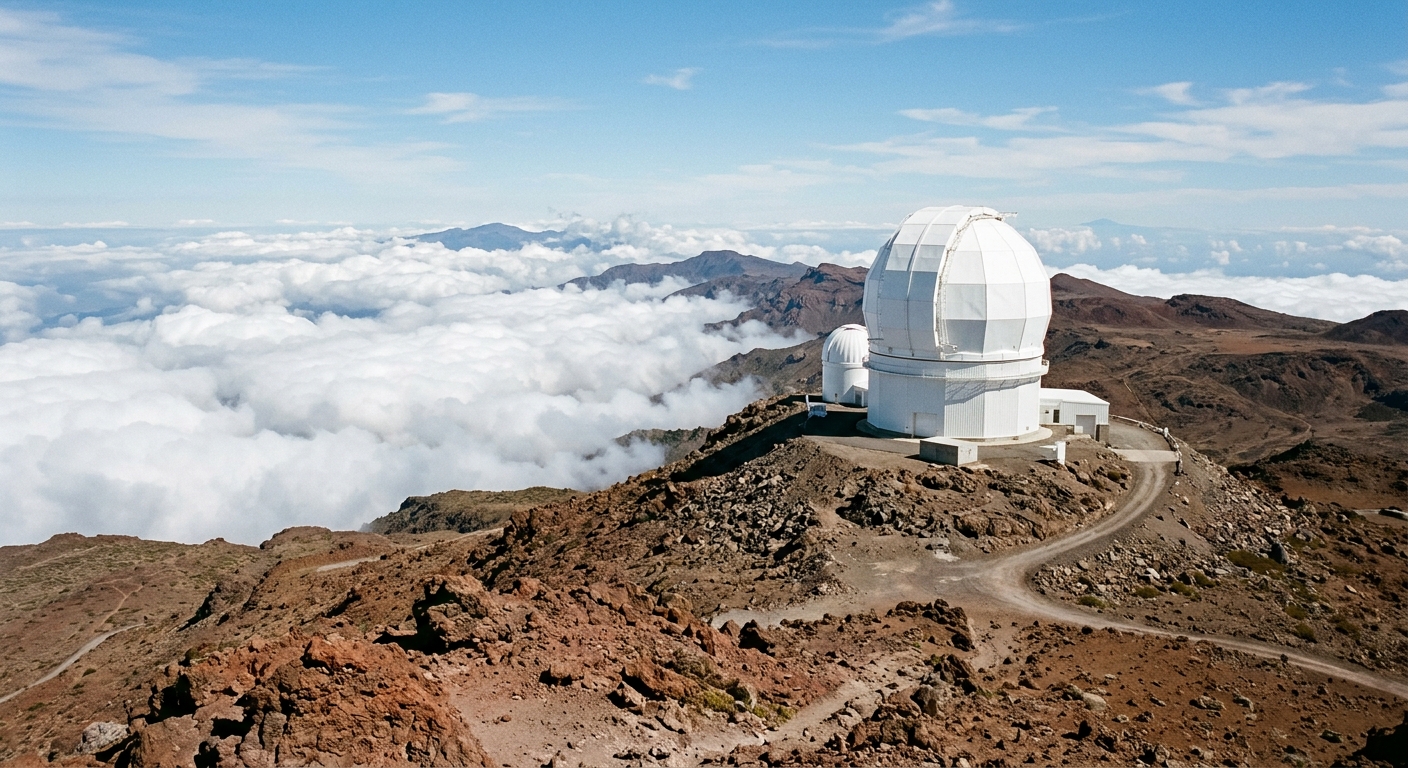
AI-generated illustration; not a photograph of the reported event.
- calendar_today November 21, 2026
The Thirty Meter Telescope at a Crossroads
After more than a decade of controversy, delays, and passionate protests, the future of the Thirty Meter Telescope (TMT) on Mauna Kea remains a subject of intense debate. On Thursday, the project reached a new turning point when the University of Hawaiʻi Board of Regents voted to amend regulations governing telescope construction on Mauna Kea, potentially clearing a path forward for the TMT project — though opposition persists.
Regents Amend Mauna Kea Master Plan
The Board of Regents’ unanimous decision specifically altered the university’s master plan for Mauna Kea, officially known as "E Ō I Nā Leo (Listen to the Voices)." Previously, the plan stated that five decommissioned telescope sites would be "ineligible for future astronomy use." This conflicted with Act 255, a 2022 state law prioritizing decommissioned sites over pristine areas for new telescope projects. The amendment removed restrictions on reusing decommissioned sites, aligning the master plan with state law. Despite these changes, the University of Hawaiʻi maintains its commitment to reducing the total number of astronomy facilities on Mauna Kea, an effort already visible with the removal of the university’s own Hōkū Keʻa telescope and the ongoing decommissioning of the United Kingdom Infrared Telescope (UKIRT).
Divided Views and Persistent Protests
Reaction to the regents’ vote was sharply divided. E. Kalani Flores, a cultural practitioner and vocal opponent of the TMT, predicted the telescope will never be completed, calling the recent developments a “last ditch effort” to keep hope alive for the project. Strong opposition persists, rooted in the view held by many Native Hawaiians that Mauna Kea is sacred land. In 2019, thousands of protesters and their supporters blocked TMT construction, sparking a statewide demonstration that highlighted cultural concerns and the sovereignty movement. Kumella Aiu echoed these sentiments, arguing against the change and insisting that the community’s opposition to further construction remains as strong as ever.
TMT’s Site and Scientific Ambitions
The Thirty Meter Telescope International Observatory continues to prioritize Mauna Kea as its favored location. Fengchuan Liu, TMT's project manager, has indicated ongoing interest in building the telescope on a decommissioned site, specifically considering the grounds of the former Caltech Submillimeter Observatory, which was removed in 2024. The TMT board has discussed the permitting process required to move to a decommissioned site with both the university regents and the Mauna Kea Stewardship and Oversight Authority. While Liu acknowledged the importance of community support, he emphasized that Mauna Kea remains the scientific community’s top choice due to its high-altitude, dry conditions, and low atmospheric water vapor, making it one of the world’s premier astronomy locations.
Challenges of Cost and Funding
One major obstacle for the TMT project remains funding. A 2024 report for the National Science Foundation (NSF) pegs the total cost at $3.9 billion, with $700 million already expended. The project's five partners — including institutions from Japan, Canada, India, and the U.S. (notably the California Institute of Technology and the University of California) — have committed $1.7 billion and expect to provide $2 billion in total contributions. Organizers hope to raise an additional $1.6 billion from the NSF, but so far, the foundation has chosen to support the Giant Magellan Telescope in Chile instead, leaving TMT’s finances uncertain. The annual operating cost is projected at around $60 million, expected to rise over its proposed 50-year lifetime.
Scientific Promise and Ongoing Uncertainty
TMT’s design calls for a primary mirror 30 meters in diameter, which would capture 9 to 16 times more light than existing large telescopes, drastically enhancing astronomers’ ability to explore black holes, galaxy formation, and exoplanets. Liu underscores the potential to probe questions such as the nature of dark matter and dark energy, and to search for planets outside our solar system that might harbor life. Despite its scientific promise, Flores and other critics believe that financial hurdles and vigorous cultural opposition will ultimately prevent the telescope’s construction.
Looking Ahead
The regents’ recent vote provides a potential legal and procedural opening for the TMT project after years of gridlock. Yet, as calls for cultural respect continue and major funding remains unresolved, the future of the Thirty Meter Telescope and the broader debate about Mauna Kea’s stewardship remain far from settled.
Source: civilbeat.org.