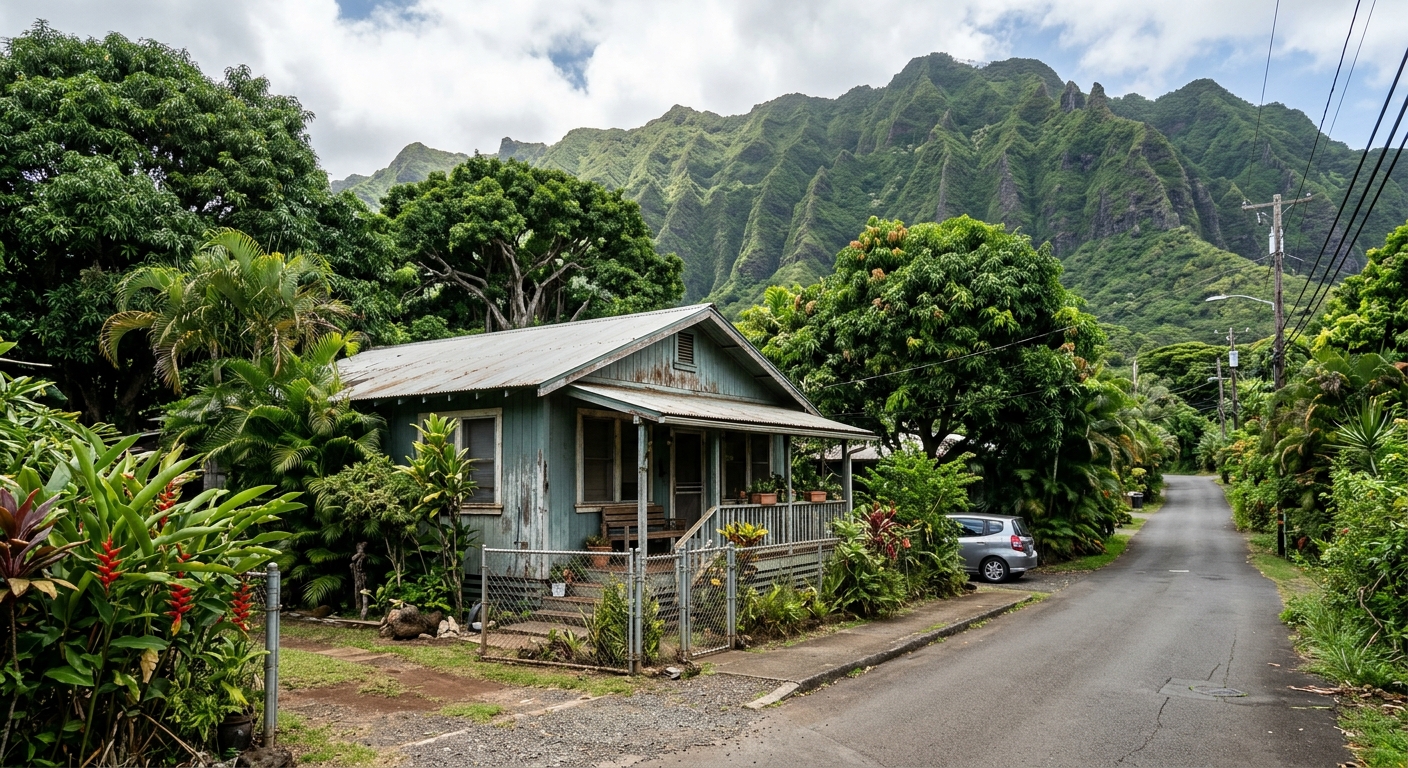
AI-generated illustration; not a photograph of the reported event.
- calendar_today November 8, 2026
Hawaiʻi’s Unrelenting Affordability Crisis
Hawai‘i’s high cost of living remains a persistent concern for residents, with prices for housing, gas, and other essentials often outpacing those on the mainland. Even as rising prices contributed to a nationwide political shift in recent elections, Hawaii's unique challenges remain deeply entrenched, prompting calls for local solutions to an issue that has been decades in the making.
Comparing Costs: Hawaiʻi vs. Mainland States
Recent experiences highlight a stark contrast between Hawaiʻi and other states. For instance, during a trip to Texas, the price of gas—at $3.60 per gallon—was a source of complaint there, yet residents of Honolulu recently paid $5.86 per gallon. Housing tells a similar story: while the median single-family home in Texas cost around $300,000 last year, in Hawaiʻi, the figure soared to nearly $1 million.
Historical context further underscores Hawaiʻi’s situation. The state once boasted higher incomes and GDP per capita than much of the continental U.S., but that advantage has eroded. Today, Hawaiʻi’s per-capita income is $46,005, only slightly above Texas’ $40,752, yet living expenses are significantly higher. When cost of living is factored in, Hawaiʻi ranks near the bottom nationally.
The Role of Income Stagnation
According to economist Steven Bond-Smith of the University of Hawaiʻi Economic Research Organization, the current strain is less about surging prices and more about wages that have failed to keep up. "Our economy in general has just been growing much more slowly than the rest of the country," Bond-Smith explains. Decades ago, higher wages made higher costs manageable, but as relative incomes stagnate or decline, the financial pressure intensifies.
Bond-Smith elaborates that this dynamic places Hawaiʻi alongside regions typically associated with economic hardship, such as Appalachia and Louisiana, underscoring that the state’s reputation for affluence belies deeper economic anxieties among its residents.
Barriers to Affordability: Housing, Permitting, and Scarcity
One of the primary forces inflating costs in Hawaiʻi is housing scarcity. Bond-Smith points to the innate limitations of island geography—mountains and undevelopable land naturally constrict the supply. Compounding this, a notably slow permitting process and restrictive zoning intensify shortages, limiting the pace at which new housing can be added.
"A lot of land here isn’t developable, and therefore less land available for development makes that land more expensive," Bond-Smith notes. The flow of new building permits remains relatively constant, regardless of economic conditions, indicating systemic bottlenecks that prevent the construction sector from responding to demand surges. When permitting and zoning limit supply, even slight increases in demand can sharply raise prices.
Proposed Policy Solutions: Lessons from Abroad
To address these affordability pressures, Bond-Smith suggests reforms focused on expediting permitting, revising zoning regulations, and allowing for greater potential housing density. He points to Auckland, New Zealand as an example, where zoning much more land for development created a more competitive market. This reform led to a significant reduction in rent growth and triggered a building boom, replacing older homes with new, more affordable townhouses without explicit affordable housing mandates.
Such changes, Bond-Smith argues, could mitigate some of the pressures in Hawaiʻi by removing permitting and zoning as primary obstacles to housing supply. However, he cautions that policies addressing affordability may only provide temporary relief if wage growth does not keep pace. Long-term solutions, he emphasizes, must focus on reviving economic growth to prevent the gap between wages and living expenses from widening further.
Continuing Coverage and Community Engagement
Civil Beat continues to highlight the impact of the state’s affordability crisis, with recent reporting on healthcare costs, employer challenges, and the persistent gap between median incomes and the cost of basic needs. As the State Legislature prepares to convene, cost of living proposals are expected to be a major focus. Residents and readers are encouraged to share their experiences and suggestions, helping to inform ongoing reporting on this critical issue.
Source: civilbeat.org.