- calendar_today October 11, 2026
Major Disasters in Hawaii Require Coordinated Recovery Funding
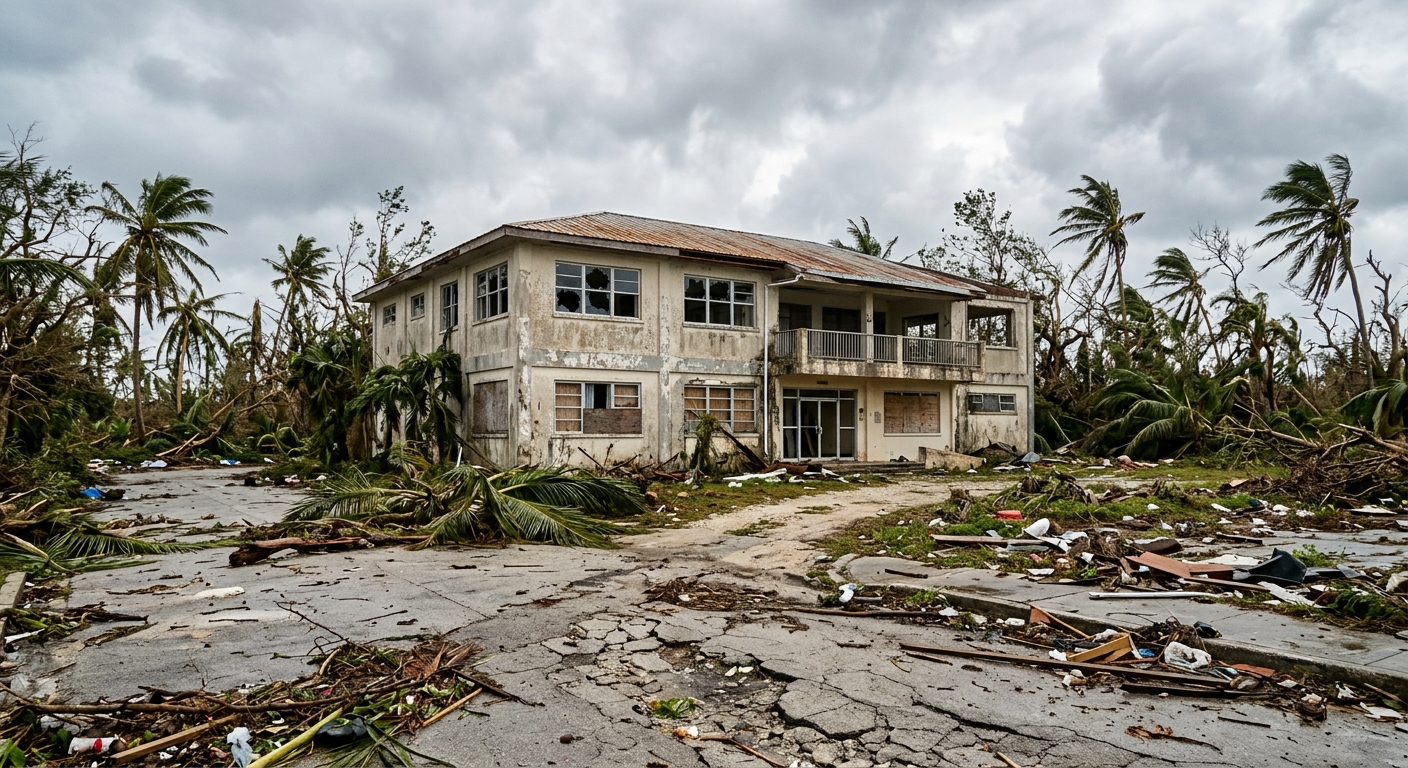
This year, Hawaii faced four federally recognized disasters in rapid succession—a series of events that caused vast damage to public facilities and called for an extensive recovery process. The damages resulted from March's Kona-low storms, a magnitude-6.0 earthquake in May, Hurricane Lala in August, and Hurricane Lowell in September, prompting ongoing efforts to secure hawaii disaster funding for repairs and recovery.
Governor's Plan for State Disaster Fund Allocation
On September 23, Governor Josh Green announced a detailed funding plan, estimating $686 million would be needed for infrastructure and public building repairs. His strategy included reallocating nearly $175 million from multiple state departments via emergency proclamation, with $121 million directed toward recovery from the March storms and May earthquake.
Additionally, Green accessed nearly $50 million from the state disaster fund, which recently received a $100 million legislative appropriation, bringing its balance to $105 million. To cover anticipated ongoing expenses—much of which is expected to be reimbursed by federal reimbursement programs—Green proposed withdrawing $300 million from Hawaii's Rainy Day fund, pending legislative approval.
FEMA Assistance and Federal Reimbursement Awaited
Federal funding is critical to Hawaii's infrastructure recovery, but such aid can be slow. On September 9, President Donald Trump approved a FEMA request to cover at least 75% of $200 million in expected damage from Hurricanes Lala and Lowell. Earlier, similar assistance was granted for the Konalow storms and the earthquake. However, FEMA assistance typically hinges on individual project assessments and may take months or years to arrive—a fact echoed by both state officials and Carl Bonham, executive director of the University of Hawaii Economic Research Organization.
As an example, Kauai County recently received $1.4 million from FEMA for public infrastructure repairs stemming from 2018 storms. Many recovery projects, therefore, require a multiyear approach and flexible disaster recovery funding.
Public Facility Repairs and Emergency Response
Immediate emergency response efforts included debris removal, urgent road fixes, filling a major sinkhole at Lanai's only commercial harbor, and extensive repairs to airport roofs and ceilings. State Department of Transportation Director Ed Sniffen reported $55 million spent on airport repairs, $45 million to stabilize hillsides on Oahu and Maui, and $3 million for Hawaii National Guard activation, with anticipated federal reimbursement covering 75% of those costs.
Long-term repairs, such as the $162 million damage to 54 public schools from the March storms and $12.5 million damage to 38 schools from Hurricane Lala, involve more complex timelines. For two severely damaged schools in Konawaena and Naalehu, rebuilding is necessary. The Department of Education has received $50 million but needs an additional $112 million for repairs from the Konalow storms alone.
Harbor, Hospital, and School Damage Challenges
Storm repair costs at other facilities remain uncertain. Port Allen Small Boat Harbor, damaged during Hurricane Lowell, needs $19 million in repairs, though some operations have recently resumed. The DLNR is using all resources available to restore access, but a timeline for full operations remains unclear.
Lahaina Small Boat Harbor, destroyed in the 2023 wildfire, highlights the slow pace of public facility repairs. Of over $26 million needed, at least $18 million of work is still pending with completion projected for 2028.
Kula Hospital in Upcountry Maui was damaged by the Kona-low storms. Reconstruction is projected to cost $65 million, with work starting in early 2027. Funding will come from both Maui Health ($23 million) and the state ($42 million), with $20 million expected from insurance.
State and Federal Aid for Individuals and Families
FEMA "public assistance" targets public infrastructure, while "individual assistance" has helped homeowners affected across all four disasters: 74 homes destroyed, 451 with major damage, and more with minor or habitable damage. The Hawaii National Guard played a vital emergency response role, rescuing residents, distributing over 44,000 gallons of water, and providing meals. The Department of Human Services received $20.5 million in federal funding to replenish food aid after widespread power outages and used additional funds for short-term housing and food bank operations.
Special unemployment benefits tied to the disasters are also being reimbursed by the federal government, and military aircraft were used for emergency equipment transport in cooperation with Hawaiian Electric and the Kauai Island Utility Cooperative.
Rainy Day Fund: A Key Tool for Disaster Recovery Funding
Governor Green underscored the need to tap Hawaii's Rainy Day fund for disaster recovery. With a balance exceeding $1.6 billion, legislative approval is required for any withdrawal, possibly to be decided in the next session. Most of the state funds spent on recovery are expected to be replaced as federal reimbursement and insurance proceeds arrive—though that process may stretch over years.
Source: westhawaiitoday.com.